

Front office
Dermatology Patient Intake Software
Collect skin cancer history, medications, photo consent, procedure consent and cosmetic payment terms before the patient reaches the exam room.
Dermatology Patient Intake Software collects what the clinician and the billing team need before a skin visit begins. Patients enter their skin cancer and family history, current drugs and the concern that brought them in. They also sign photo and procedure consents, and a payment agreement for cosmetic care, on a phone or a tablet at check-in.



 6,500+ specialty providers

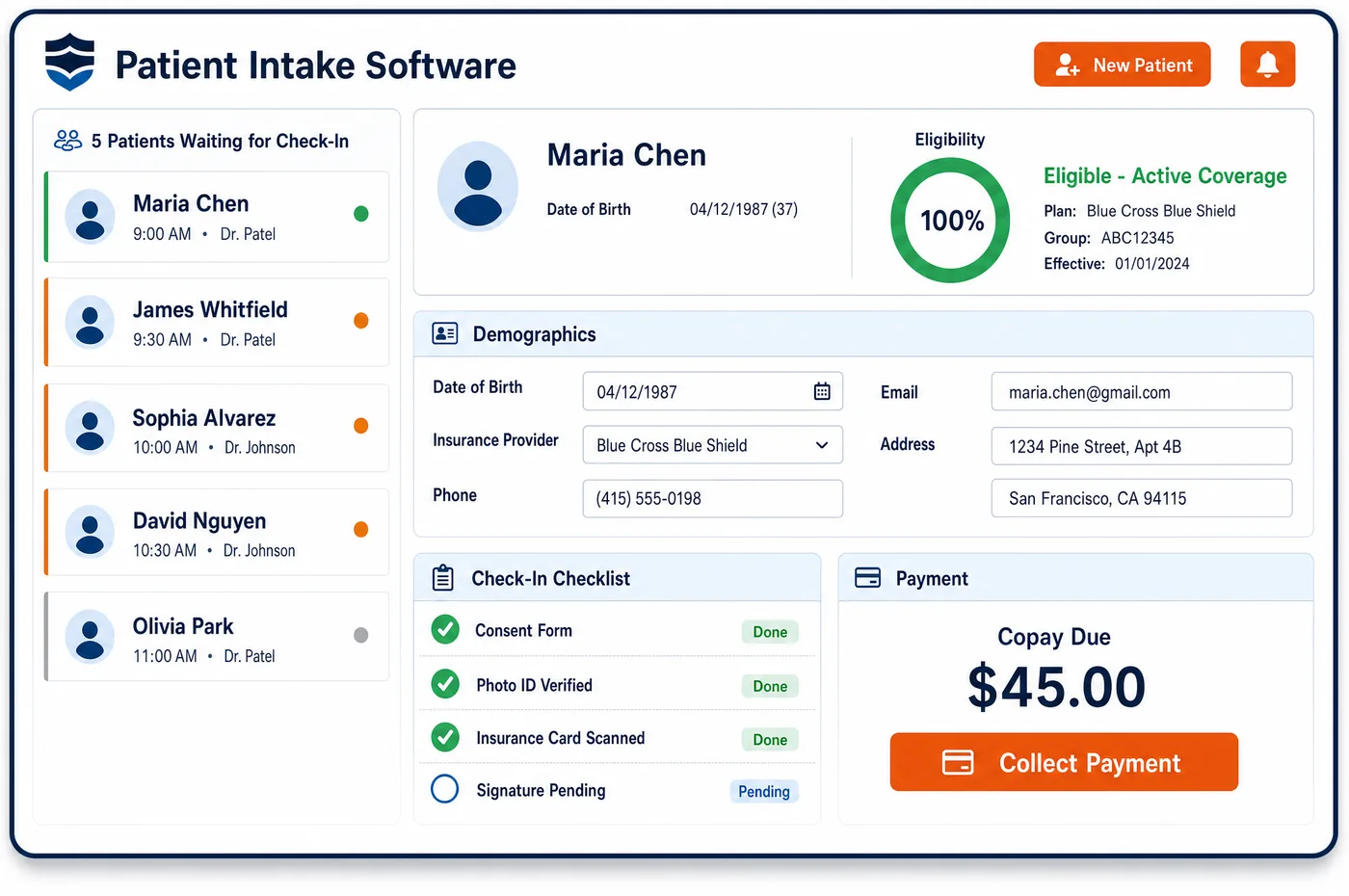
Patient Intake in a Dermatology Practice
A skin visit moves fast once the patient is in the room, so the facts have to be ready first. The intake form asks about past melanoma or other skin cancers, family history, sunburns and tanning, and any immune-suppressing drugs, which change how a lesion is judged. It asks what the patient wants looked at, in their own words, since the reason for the visit shapes how it is billed. Patients starting isotretinoin have extra steps tied to the iPLEDGE program. Consent comes next: a photo consent for lesion mapping and before-and-after images, a procedure consent for biopsies or excisions, and a financial agreement for any cosmetic service. Dermatology patient intake software sends these forms ahead of the visit by text or email. Signed forms and card images land on the account, and check-in at the desk becomes a quick confirmation rather than a clipboard.
Why Is Patient Intake Different in Dermatology?
History drives the exam in this specialty. A patient with a prior melanoma, an organ transplant or many past basal cell cancers needs a closer look than a first-time visitor with one mole. If that history is collected on paper and typed in later, the clinician may start the exam without it. Intake that arrives before the visit puts the risk picture in front of the provider when it counts.
Photos are a normal part of skin care, and they are protected health information. Full-face images are one of the identifiers HIPAA lists for de-identification. Lesion maps, body photos and cosmetic before-and-after shots all need a clear consent. It should say how the images will be used and kept. A missing photo consent can stall a visit or a marketing request months later.
Money talks happen at intake too. A cosmetic patient should sign a payment agreement before treatment, and a Medicare patient asking for removal of a lesion that does not meet coverage rules should be told in advance that Medicare will not pay. Patient intake that collects these signatures early avoids an awkward talk after the procedure is done.
What Dermatology Patient Intake Software Handles
- Isotretinoin and the iPLEDGE REMS
- FDA's iPLEDGE program links prescribers, pharmacies and patients to reduce the risk of fetal harm, and pre-treatment pregnancy tests are done in a medical setting. Intake flags patients starting or on isotretinoin, so the program steps are part of the visit plan. (U.S. Food and Drug Administration: iPLEDGE Risk Evaluation and Mitigation Strategy (REMS))
- Photo consent for clinical images
- HIPAA's de-identification standard lists full-face photographs and similar images as identifiers. Intake collects a photo consent that covers lesion mapping and cosmetic before-and-after images before any picture is taken. (HHS Office for Civil Rights: Guidance on De-identification of Protected Health Information under the HIPAA Privacy Rule)
- Reason for visit in the patient's words
- Medicare's routine-checkup exclusion covers exams not tied to a specific illness, symptom, complaint or injury. Intake records the patient's own concern, such as a mole that changed or bled, so the clinician knows what brought them in. (CMS Medicare Benefit Policy Manual, Chapter 16: General Exclusions from Coverage (section 90, Routine Services))
- Advance notice for lesions that may be cosmetic
- WPS policy says benign lesion removal that poses no threat to health or function is cosmetic, and the physician must tell the patient in advance that Medicare will not cover it. Intake holds the signed financial responsibility form for those visits. (CMS Medicare Coverage Database, LCD L35498: Removal of Benign Skin Lesions (WPS))
- Symptoms that support medical necessity
- The same WPS policy covers removal when the record shows bleeding, itching, pain, inflammation or a change in appearance, among other signs. Intake asks the patient about these symptoms, and the clinician confirms and documents them in the exam. (CMS Medicare Coverage Database, LCD L35498: Removal of Benign Skin Lesions (WPS))
How Does Dermatology Patient Intake Software Work?
1. Send forms before the visit
Once the visit is booked, the patient gets a link to the forms that match the visit type. A Mohs patient sees different forms than a cosmetic consult.
2. Collect history and medicines
Patients enter their skin cancer history, family history and current drugs. Answers carry over from the patient's existing record, so a returning patient only confirms what changed.
3. Capture cards and identity
Patients upload their insurance cards and photo ID from home. Anything new is checked against the details set at skin practice registration.
4. Sign consents
Photo, procedure and cosmetic payment consents are signed on the patient's own device or a tablet. Signed forms are stored on the account with the date.
5. Confirm at the desk
At arrival, staff confirm the forms are done and take any copay due. The patient goes to the room with history and consents already in place.
Dermatology Patient Intake Software vs. Generic Software
| Area | Generic approach | Unlimited Systems |
|---|---|---|
| Skin cancer history | Written on a clipboard and typed later. | Entered by the patient before the visit. |
| Photo consent | Verbal, or a paper form that gets lost. | Signed digitally and stored on the account. |
| Cosmetic agreements | Discussed after treatment. | Signed before the service starts. |
| Isotretinoin patients | Program steps tracked from memory. | Patients flagged at intake for the iPLEDGE steps. |
| Check-in | Long lines while forms are filled out. | A short confirmation of forms already done. |
Who Uses It in a Dermatology Practice
- Medical assistant: History, medications and the patient's concern ready before rooming, with photo consent already signed.
- Dermatologist: A risk picture for each patient, such as past melanoma or transplant drugs, before the exam starts.
- Cosmetic coordinator: Signed payment terms and before-and-after photo consent in place before any treatment, with the patient already marked self-pay.
Dermatology Patient Intake Software FAQs
Patient intake for a new skin patient should ask about past skin cancers, family history of melanoma, sun exposure, current medications and any drugs that weaken the immune system. It should also ask what the patient wants checked, in their own words. Consent for photos and procedures, plus card images and ID, round out the packet before the first visit.
Photo consent is collected at intake because clinical images are protected health information. HIPAA lists full-face photographs as identifiers, and skin care uses lesion maps, body photos and cosmetic before-and-after images. A signed consent that explains how images are used and stored protects the patient and the practice before the first picture is taken.
Intake handles isotretinoin patients by flagging them for the iPLEDGE program steps. FDA's program links prescribers, pharmacies and patients, and pre-treatment pregnancy tests are done in a medical setting. FDA has approved changes to the program with a set start date, so staff should follow the current program rules for each visit.
Cosmetic patients can sign payment terms ahead of time on their phone or a tablet. The form states the quoted price, any deposit and the cancellation terms. Having it signed before treatment means the cost talk happens up front, and the signed copy sits on the account if a question comes up later.
Intake records why the patient came in, in the patient's own words, such as a new spot, a mole that bleeds or an itchy rash. Medicare excludes routine checkups that are not tied to a symptom or complaint, so the reason matters. The clinician still confirms and documents what is found during the exam.
Signed intake forms are stored on the patient's account with the date and the version of the form. Answers that feed the record, such as medications and history, are written to the chart. Card images go to the billing side, so staff do not type the same details twice.
Related Dermatology Software
Front office
In the revenue cycle
Patient Intake for related specialties
Sources
- U.S. Food and Drug Administration: iPLEDGE Risk Evaluation and Mitigation Strategy (REMS)
- HHS Office for Civil Rights: Guidance on De-identification of Protected Health Information under the HIPAA Privacy Rule
- CMS Medicare Benefit Policy Manual, Chapter 16: General Exclusions from Coverage (section 90, Routine Services)
- CMS Medicare Coverage Database, LCD L35498: Removal of Benign Skin Lesions (WPS)
GET STARTED
See Unlimited Systems in Action
Whether you're actively evaluating new technology or simply preparing for your next vendor renewal, Unlimited Systems can help you understand where your current workflows may be creating avoidable revenue risk.