

Front office
Dermatology Patient Management Software
Keep one record for each skin patient across medical visits, biopsies, Mohs cases, biologic courses and self-pay cosmetic care.
Dermatology Patient Management Software keeps one record for each patient across every kind of skin care the practice gives. Medical visits, biopsies and their results, Mohs cases, phototherapy courses, biologic therapy and self-pay cosmetic work all sit on the same patient account, with each service line kept apart where billing and coverage require it.



 6,500+ specialty providers

Patient Management in a Dermatology Practice
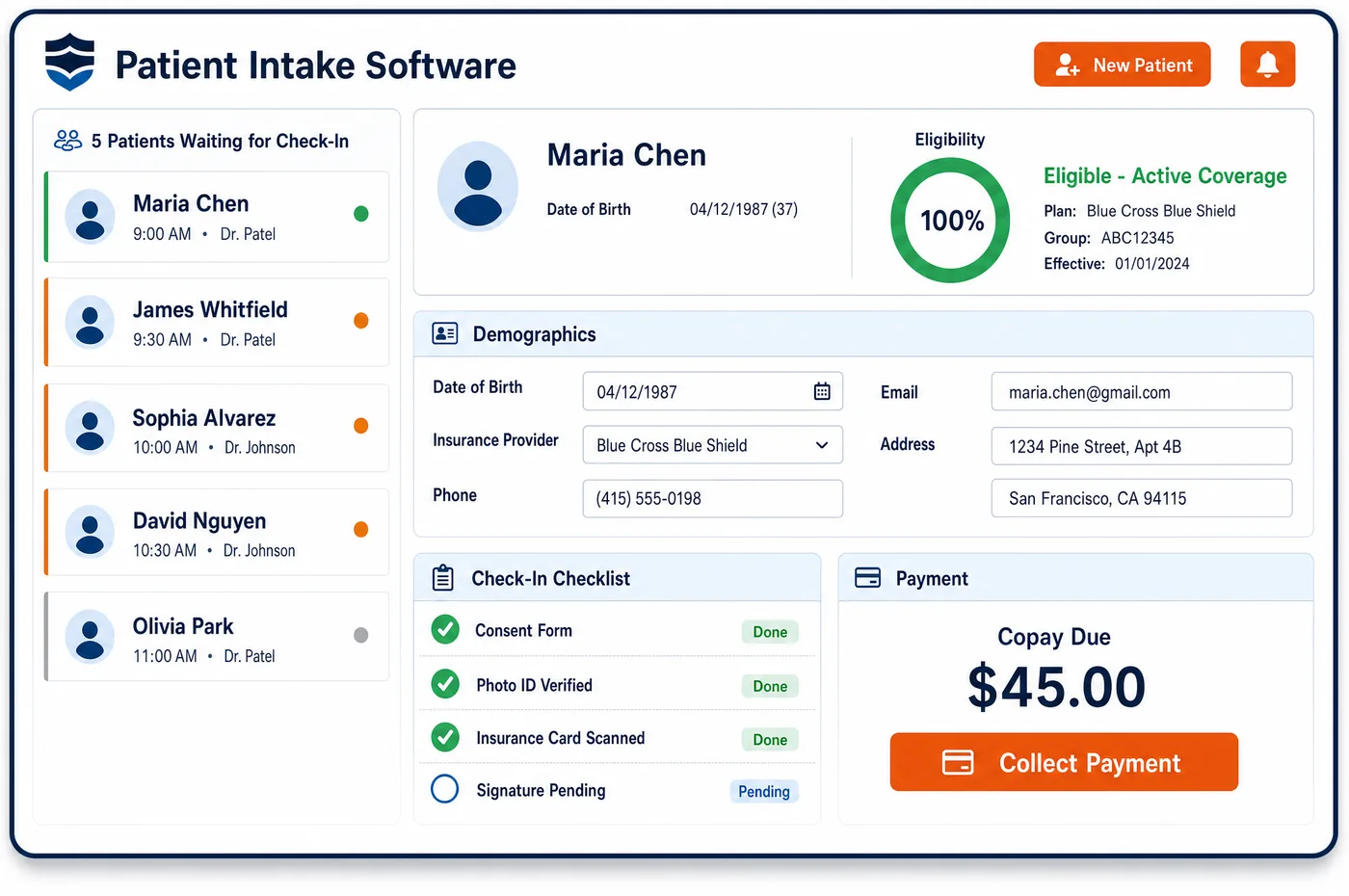
Most dermatology patients come back again and again. A skin check leads to a biopsy, the pathology report decides what happens next, and a basal cell carcinoma may come back for an excision or a Mohs case. A psoriasis patient may move from creams to a phototherapy course and then to a biologic. The same person may also book a cosmetic treatment they pay for on their own. Dermatology patient management software ties these threads to one record. Staff see open biopsy results that still need a call, any procedure whose global period is still running, the status of a biologic approval, and how many phototherapy sessions have been used. Cosmetic quotes and payments sit on the same account but stay off insurance claims, since Medicare does not cover cosmetic surgery. When the record is right, the front desk, the clinical team and billing all work from the same facts.
Why Is Patient Management Different in Dermatology?
Skin care runs in episodes that overlap. One patient can have a healing excision site, a pending biopsy on a second lesion and a psoriasis flare at the same visit. Each has its own diagnosis, its own billing rules and its own next step. A record that only lists past appointments hides which episode a new visit belongs to. That matters, because a follow-up inside a global surgical package is not a new billable visit.
Pathology changes the record after the patient leaves. A lesion removed as a likely benign growth may come back as melanoma or squamous cell carcinoma. That result changes the diagnosis on the claim, the follow-up plan and sometimes the next procedure. Patient management for a skin practice has to hold the episode open until the report is back and a clinician has acted on it.
Many skin practices also run two kinds of business under one roof. Medical dermatology is billed to insurance. Cosmetic work is self-pay, often after a quote and a deposit. The same patient may have both on one day. Keeping both on a single account, while never letting a cosmetic charge drift onto a claim, is a daily job for the front desk and the billing team.
What Dermatology Patient Management Software Handles
- Skin biopsy codes by technique (11102–11107)
- Biopsy codes are split by technique: tangential (11102, 11103), punch (11104, 11105) and incisional (11106, 11107), each with an add-on code for more lesions. The record lists every specimen sent, so staff can see which reports are back and which patients still need to hear their result. (Federal Register: CY 2019 Physician Fee Schedule final rule, skin biopsy codes 11102–11107 (83 FR 59452, at 59522))
- Minor-surgery global periods
- Medicare treats procedures with a 000 or 010 global indicator as minor surgery, and related recovery visits in a 010 period are not paid on their own. The record flags patients who are inside a global period, so a wound check is not booked as a new billable visit. (CMS MLN Booklet MLN907166: Global Surgery)
- Mohs history by anatomic site (17311–17314)
- Mohs codes split by site: 17311 and 17312 for the head, neck, hands, feet and genitalia, and 17313 and 17314 for the trunk, arms and legs. Each Mohs case stays on the record with its site and stage count, which helps when the patient returns with a new tumor. (CMS Medicare Coverage Database, Billing and Coding Article A56836: Mohs Micrographic Surgery (CGS))
- Cosmetic care on the same account
- Medicare's benefit manual excludes surgery aimed at improving appearance, apart from narrow repair and function cases. Cosmetic visits sit on the account as self-pay, apart from the insurance episodes, so they never feed a claim by mistake. (CMS Medicare Benefit Policy Manual, Chapter 16: General Exclusions from Coverage (section 120, Cosmetic Surgery))
- Biologic approval status
- UnitedHealthcare's dupilumab program approves treatment for atopic dermatitis for a set term and asks for proof of a positive response at renewal. The record shows the drug, the approval and its end date, so staff can pull the chart notes before it lapses. (UnitedHealthcare Pharmacy Clinical Program 2026 P 2116-24: Dupixent (dupilumab) Prior Authorization/Medical Necessity)
- Actinic keratosis treatment history
- Under NCD 250.4, Medicare covers destruction of actinic keratoses without limits based on lesion or patient traits. The record keeps each AK session with its lesion count and method, so the next visit starts from a full history. (CMS National Coverage Determination 250.4: Treatment of Actinic Keratosis)
How Does Dermatology Patient Management Software Work?
1. Open one record per patient
The account is created once, and registration for skin patients checks for a likely duplicate before a second chart is made. Every later visit, procedure and cosmetic service then attaches to that one account.
2. Tie each visit to an episode
Staff link each visit to the condition it treats, such as a lesion under watch, a cancer under treatment or a psoriasis course. That link shows at once whether a visit falls inside a global period.
3. Track specimens and results
Each biopsy specimen is listed against the visit that sent it. When the pathology report arrives, the record shows that the result is in and who still has to tell the patient.
4. Keep coverage and approvals current
Insurance, pharmacy benefit details and any approval for a biologic or a light therapy course stay on the record. Staff see when an approval is close to its end before the next visit is booked.
5. Keep cosmetic work apart
Cosmetic services carry a self-pay flag and their own quote. Payments for them post to the same account but never reach an insurance claim.
Dermatology Patient Management Software vs. Generic Software
| Area | Generic approach | Unlimited Systems |
|---|---|---|
| Episodes of care | Visits listed by date with no link to the condition. | Each visit tied to its lesion, cancer or chronic skin disease. |
| Biopsy results | Reports tracked in an inbox or on paper. | Pending reports listed on the record until someone acts on them. |
| Global periods | Wound checks billed as new visits, then denied. | Patients inside a global period flagged before booking. |
| Cosmetic care | Kept in a separate system or spreadsheet. | Self-pay services on the same account, kept off claims. |
| Biologic status | Approval dates kept in a binder. | Approval and end dates shown on the patient record. |
Who Uses It in a Dermatology Practice
- Front desk: One account per patient, with flags for global periods, pending results and cosmetic balances before the patient reaches check-in and intake.
- Billing manager: Insurance episodes and self-pay cosmetic work kept apart on the same account, so claims carry only covered care.
- Dermatologist: Each patient's lesions, cancers, biologics and light therapy history in one place, ready before the visit starts.
Dermatology Patient Management Software FAQs
Patient management for a dermatology practice means one record for each patient across all the care they get. That covers skin checks, biopsies and results, excisions, Mohs cases, phototherapy, biologics and self-pay cosmetic work. Each visit is tied to the condition it treats, so staff can see where the patient is in each episode and what still has to happen.
Pending biopsy results are tracked by listing each specimen against the visit that sent it. The record shows which pathology reports are back, which are still out, and which results have not yet reached the patient. That keeps a melanoma or carcinoma result from sitting unread, and it gives staff a clear list to work each day.
Cosmetic and medical care can share one account while staying apart for billing. Cosmetic services carry a self-pay flag and their own quote, and their payments post to the same account. Medicare does not cover cosmetic surgery, so those services stay off insurance claims. The patient still sees one balance, with each part labeled.
The record shows global periods because many skin procedures carry a minor-surgery global period under Medicare. Related recovery visits inside that period are part of the procedure payment. When the front desk can see that a patient is inside one, a routine wound check is booked as included care, not as a new visit that would be denied.
Mohs surgery history stays on the record with the tumor site, the number of stages and the repair. Because Mohs codes differ for the head, neck, hands, feet and genitalia versus the trunk and limbs, the site matters for billing. A clear history also helps the surgeon when the patient later returns with a new skin cancer.
Biologic status shows as the drug, the current approval and its end date. Plans such as UnitedHealthcare approve dupilumab for a set term and then ask for proof that the patient improved. Seeing that date on the record lets staff gather chart notes before the approval lapses, so treatment is not interrupted.
Related Dermatology Software
Front office
Patient Management for related specialties
Sources
- Federal Register: CY 2019 Physician Fee Schedule final rule, skin biopsy codes 11102–11107 (83 FR 59452, at 59522)
- CMS MLN Booklet MLN907166: Global Surgery
- CMS Medicare Coverage Database, Billing and Coding Article A56836: Mohs Micrographic Surgery (CGS)
- CMS Medicare Benefit Policy Manual, Chapter 16: General Exclusions from Coverage (section 120, Cosmetic Surgery)
- UnitedHealthcare Pharmacy Clinical Program 2026 P 2116-24: Dupixent (dupilumab) Prior Authorization/Medical Necessity
- CMS National Coverage Determination 250.4: Treatment of Actinic Keratosis
GET STARTED
See Unlimited Systems in Action
Whether you're actively evaluating new technology or simply preparing for your next vendor renewal, Unlimited Systems can help you understand where your current workflows may be creating avoidable revenue risk.