

Payments & AR
Dermatology Accounting Software
Close the books on medical, Mohs, dermpath, cosmetic and retail revenue by location and entity, with drug and lab costs set against what each line earns.
Dermatology Accounting Software carries every charge, payment and adjustment from billing into the general ledger. Medical visits, Mohs surgery, the dermpath lab and cosmetic care each post to their own cost centers. Drug and lab costs sit next to the revenue they support, and each location or entity closes on the same numbers.



 6,500+ specialty providers

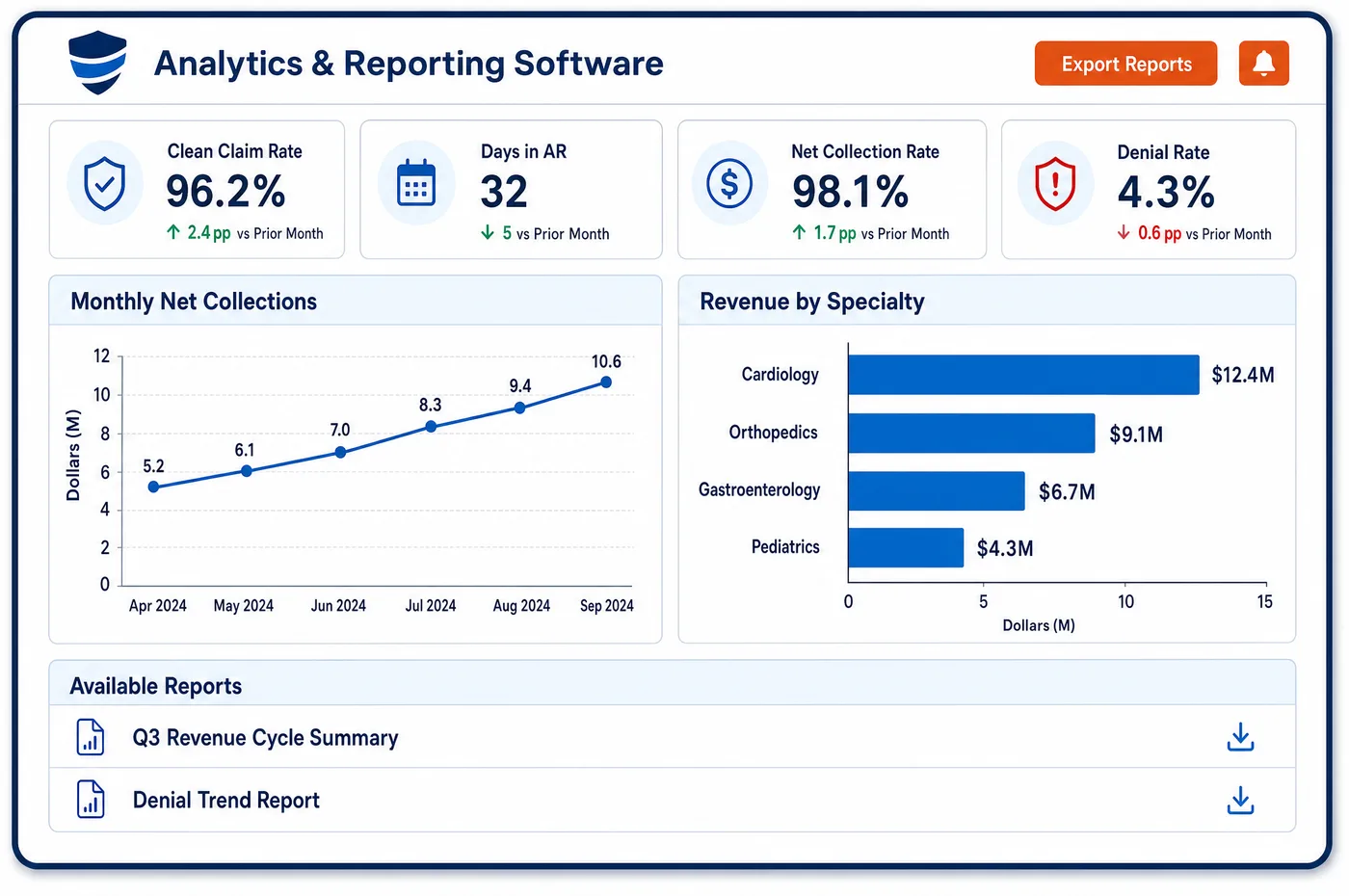
Accounting in a Dermatology Practice
A dermatology group often runs several businesses under one roof. There is medical care paid by insurers, surgical care such as Mohs and reconstruction, a pathology lab that may bill its own claims, and a cosmetic line paid by patients. Unlimited Systems posts payments, contractual adjustments and write-offs to the general ledger as double-entry lines, using cost centers by provider, location and service line. Revenue is recognized from remittance detail, not from estimates. Photodynamic therapy drugs and other office-billed drugs carry their acquisition cost, so margin shows by drug and payer. The pathology lab can be its own cost center, with its slide-prep revenue and lab costs side by side. For groups with several Tax IDs, entities sit in one database with a divisional hierarchy, so a regional manager and the parent company read the same ledger. Journals then export in standard formats to the group's corporate accounting system.
Why Is Accounting Different in Dermatology?
Mixed revenue is the first problem. One patient visit can carry an insured skin check, a self-pay cosmetic treatment and a retail sunscreen purchase. Each of those has different rules for revenue, refunds and, for retail goods, state sales tax. If they all land in one revenue account, the practice can't see which line is growing, and its accountant spends the close pulling them apart again.
Pathology economics are the second. An in-house dermpath lab has its own staff, equipment, supplies and CLIA fees, and it earns money on its own claims. A practice that sends slides out pays nothing for the lab but earns nothing on it either. When a practice bills a test component it bought from an outside pathologist, Medicare's anti-markup rule can cap what it is paid. Good accounting keeps the lab's revenue and costs together, so owners can judge whether it pays for itself.
Ownership adds the third layer. Many dermatology groups have grown by adding practices, often with private equity backing and a management company above several clinical entities. Each entity may have its own Tax ID, payer contracts and bank accounts. The parent still needs one close, one set of statements and a clear audit trail from each patient payment to each entity's books. Dermatology accounting has to serve both the clinic and the investor at once.
What Dermatology Accounting Software Handles
- Photodynamic therapy drug costs (J7308, J7309, J7345)
- PDT visits bill a treatment code such as 96567, 96573 or 96574 along with the photosensitizing drug. The drug's acquisition cost is set against what each payer pays, so PDT margin shows by drug and payer, a simple form of buy-and-bill tracking. (Blue Cross NC Corporate Medical Policy: Dermatologic Applications of Photodynamic Therapy (applicable codes))
- Medicare anti-markup limit
- When a practice bills Medicare for a test component performed by a physician outside its practice, payment can't exceed the lowest of the performer's net charge, the billing practice's charge or the fee schedule amount. Purchased pathology components are tracked so the books reflect that cap. (eCFR: 42 CFR 414.50, Physician or other supplier billing for diagnostic tests performed or interpreted by a physician who does not share a practice)
- Pathology professional and technical parts
- Medicare pays the professional and technical parts of surgical pathology on their own terms. Revenue from slide preparation and from the read can post to separate accounts, so a lab's true margin is visible. (CMS Medicare Claims Processing Manual, Chapter 12: Physicians/Nonphysician Practitioners (pathology payment))
- CLIA certificate and survey fees
- An in-house dermpath lab needs a CLIA certificate and pays CLIA certification and survey fees. Those fees post to the lab's cost center with its staff and supplies. (CMS: Clinical Laboratory Improvement Amendments (CLIA))
- Cosmetic revenue apart from insured care
- Medicare excludes surgery done to improve appearance, so cosmetic work is self-pay. It posts to its own revenue accounts, apart from payer revenue and contractual adjustments. (CMS Medicare Benefit Policy Manual, Chapter 16, Section 120: Cosmetic Surgery)
How Does Dermatology Accounting Software Work?
1. Map the chart of accounts
Service lines, providers, locations and entities are set up as cost centers. Medical, Mohs, pathology, cosmetic and retail revenue each get their own accounts.
2. Post cash and adjustments as they happen
Payments, contractual adjustments, refunds and write-offs post to the ledger as double-entry lines when they post on the account. Deposits from patient card payments and remittances tie to the bank.
3. Track drug and lab costs
PDT drugs and other office-billed drugs carry their acquisition cost. The pathology lab's supplies, staff and fees post to its own cost center, set against its revenue.
4. Consolidate entities
Each Tax ID closes on its own books, and the divisional hierarchy rolls them up for the parent. Intercompany items stay visible instead of being netted away.
5. Export and review
Journals export to the group's corporate accounting system in a standard format. Leaders review margin by service line in dermatology analytics, with each figure traced back to its source.
Dermatology Accounting Software vs. Generic Software
| Area | Generic approach | Unlimited Systems |
|---|---|---|
| Revenue accounts | One revenue line for the whole practice. | Medical, Mohs, pathology, cosmetic and retail posted apart. |
| Pathology lab | Lab costs buried in practice overhead. | Lab revenue and costs in their own cost center. |
| Office-billed drugs | Drug costs reviewed once a year. | Acquisition cost set against payment by drug and payer. |
| Multiple entities | A spreadsheet merges each entity's books. | Several Tax IDs in one database with a hierarchy. |
| Month-end close | Billing totals re-keyed into the ledger. | Double-entry lines flow from billing to the ledger. |
Who Uses It in a Dermatology Practice
- Controller: A close built from posted transactions, with every journal line traced to the payment or adjustment behind it and each entity's books kept apart.
- Practice administrator: Margin by location and service line, so staffing and supply decisions for Mohs days, the lab and the cosmetic suite rest on real numbers.
- Owners and investors: Consolidated statements across entities, with a clear audit trail from patient payments to each Tax ID's books.
Dermatology Accounting Software FAQs
Accounting for a dermatology practice should separate medical, surgical, pathology, cosmetic and retail revenue. Each has its own payers, rules and margins. Cost centers by provider, location and entity keep them apart, so the practice can see which lines are growing and the close doesn't depend on someone sorting revenue by hand.
An in-house dermpath lab works best as its own cost center. Its revenue from slide preparation and reads posts there, along with its staff, supplies, equipment and CLIA fees. Owners can then see whether the lab covers its costs and how its margin changes as volume and payer rates change.
The Medicare anti-markup rule limits what a practice is paid when it bills for a test component performed by a physician who does not share its practice. Payment can't exceed the lowest of the performer's net charge, the billing practice's own charge, or the fee schedule amount. Practices that buy pathology components need their books to reflect that limit.
Cosmetic deposits and prepaid packages are money the practice holds before the treatment is done. Many accountants record them as a liability until the service is delivered, then move them to revenue. Keeping cosmetic payments in their own accounts makes that step easy and keeps self-pay revenue apart from insurance revenue.
Groups with several Tax IDs can keep their entities in one database with a divisional hierarchy. Each entity closes on its own books, and the hierarchy rolls them up for the parent. That suits private equity backed groups and management companies that need both clinic-level and group-level statements.
Ledger activity exports as standard general ledger journals, which sync with corporate accounting and ERP systems such as QuickBooks or NetSuite. Revenue, adjustments and drug costs arrive already coded to their accounts. The finance team reviews and posts them instead of rebuilding them from billing reports each month.
Related Dermatology Software
Payments & AR
Accounting for related specialties
Sources
- Blue Cross NC Corporate Medical Policy: Dermatologic Applications of Photodynamic Therapy (applicable codes)
- eCFR: 42 CFR 414.50, Physician or other supplier billing for diagnostic tests performed or interpreted by a physician who does not share a practice
- CMS Medicare Claims Processing Manual, Chapter 12: Physicians/Nonphysician Practitioners (pathology payment)
- CMS: Clinical Laboratory Improvement Amendments (CLIA)
- CMS Medicare Benefit Policy Manual, Chapter 16, Section 120: Cosmetic Surgery
GET STARTED
See Unlimited Systems in Action
Whether you're actively evaluating new technology or simply preparing for your next vendor renewal, Unlimited Systems can help you understand where your current workflows may be creating avoidable revenue risk.