

Payments & AR
Dermatology Patient Billing Software
Clear statements for skin checks, biopsies, pathology, Mohs and cosmetic care, with estimates up front and self-pay kept apart from what insurance owes.
Dermatology Patient Billing Software produces the statements and estimates a skin practice sends to its patients. It shows what insurance paid for a visit, biopsy, pathology read or Mohs case, and what the patient still owes. Cosmetic services are quoted and billed as self-pay, and every statement links to text or online payment.



 6,500+ specialty providers

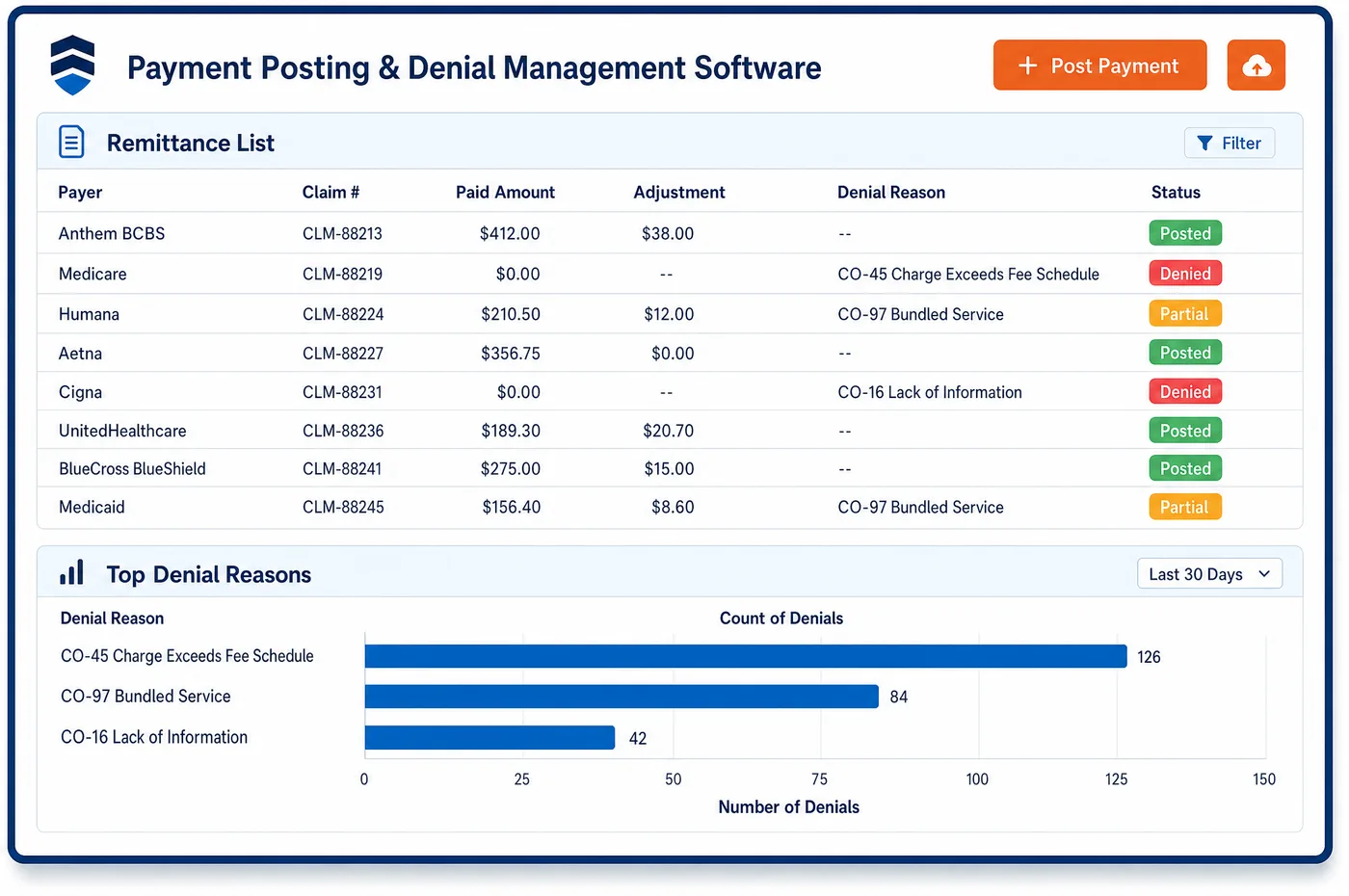
Patient Billing in a Dermatology Practice
Patients often get more than one bill for one skin visit. The office visit and biopsy come from the practice. The pathology read may come from the practice's own lab or from an outside lab that bills on its own. Unlimited Systems builds each statement from the posted claim, so the patient sees the date, the service, what insurance paid and the balance in plain words. A deductible applied to a Mohs case shows as a deductible, not as a surprise. Cosmetic work such as fillers, peels or laser treatments is quoted before the visit and billed as self-pay, apart from insurance balances. Statements go out by text and email with a link to pay, and patients can set up a payment plan without a call. When the balance is paid, the payment posts back to the ledger and the front desk sees it at check-in.
Why Is Patient Billing Different in Dermatology?
Pathology is the most common source of billing confusion in dermatology. A patient who came in for a skin check may not expect a separate charge for the biopsy read, or a second bill from a lab they never visited. Statements that name the pathology service, and say who is billing it, cut down on calls and disputes. When the practice runs its own dermpath lab, that line should appear on the same statement as the biopsy.
The line between covered and cosmetic care runs through the middle of the specialty. A seborrheic keratosis removed because it bleeds may be covered. The same removal done for looks is not, and the patient pays. Patients need to know which side of that line they are on before the work is done. That means estimates, notices and clear consent at the visit, then a statement that matches what they were told.
Self-pay work also has its own rules. Uninsured patients and patients who choose not to use insurance are entitled to a good faith estimate for scheduled care under the No Surprises Act. Cosmetic patients may pay a deposit, buy a package of treatments or pay at the visit. Patient billing for dermatology keeps those balances separate from deductibles and coinsurance, so neither one is applied to the other.
What Dermatology Patient Billing Software Handles
- Good faith estimates for self-pay care
- Uninsured and self-pay patients can get a good faith estimate of expected charges for scheduled care. Cosmetic and self-pay quotes are built from the practice's fee schedule and kept with the account. (CMS: Good Faith Estimates under the No Surprises Act)
- Medicare cosmetic exclusion
- Medicare does not cover surgery done to improve appearance. Cosmetic services for Medicare patients are billed to the patient, and the statement says so in plain words. (CMS Medicare Benefit Policy Manual, Chapter 16, Section 120: Cosmetic Surgery)
- Voluntary notices for excluded services
- No ABN is required for a service Medicare never covers, but a voluntary notice can tell the patient they will pay. Staff can record that notice so the later statement matches what the patient was told. (CMS MLN Booklet: Medicare Advance Written Notices of Non-coverage (MLN006266))
- Benign lesion removal liability
- Under the WPS LCD, a patient who asks to remove benign, symptom-free lesions for cosmetic reasons is liable, and the physician should tell them in advance. That notice is noted before the bill is sent. (CMS Medicare Coverage Database, LCD L35498: Removal of Benign Skin Lesions (WPS))
- Pathology lines on the statement
- Surgical pathology is reported per specimen, so a visit with three separately submitted lesions can carry three 88305 lines. Statements list each one, so patients can see why the path charge is what it is. (CMS NCCI Policy Manual for Medicare Services, Chapter III (Surgery: Integumentary System))
How Does Dermatology Patient Billing Software Work?
1. Estimate before the visit
Procedures and cosmetic work get an estimate before the visit, using benefits checked during dermatology financial clearance. Self-pay patients get a good faith estimate for scheduled care.
2. Separate cosmetic from covered care
Cosmetic services are set up as self-pay items with their own prices. They are billed to the patient at the visit and never sent to insurance by mistake.
3. Build the statement from posted claims
Once insurance pays through posted remittances, the statement shows each service, what the payer paid and the patient's share. Pathology lines say whether the practice's lab or an outside lab did the work.
4. Send by text and email
Each patient statement goes out by text and email with a secure link. Patients can pay by card, set up a plan or keep a card on file through integrated patient payments.
5. Follow up and close
Unpaid balances get reminders on a set cycle. Paid balances post back to the ledger at once, so the front desk sees a current balance at the next skin check.
Dermatology Patient Billing Software vs. Generic Software
| Area | Generic approach | Unlimited Systems |
|---|---|---|
| Pathology charges | A surprise line with no explanation. | Each path service named, with who billed it. |
| Cosmetic balances | Mixed in with insurance balances. | Quoted and billed as self-pay, kept apart. |
| Estimates | Given verbally, if at all. | Written estimates for procedures and self-pay care. |
| Statement delivery | Paper statements by mail only. | Text and email statements with a link to pay. |
| Payment status | Desk sees last month's balance. | Payments post back to the ledger right away. |
Who Uses It in a Dermatology Practice
- Front desk: Current balances at check-in and clear estimates to hand to patients before a Mohs case or cosmetic visit.
- Billing manager: Fewer calls about pathology charges and cosmetic balances, because statements explain them in plain words.
- Patient: One clear statement per visit, a link to pay from a phone, and the option of a payment plan for larger balances.
Dermatology Patient Billing Software FAQs
Patient billing in dermatology mixes covered care, cosmetic care and pathology on the same patient, often on the same day. Patients may get a separate bill for a biopsy read, and cosmetic work is paid by the patient. Clear estimates and statements that name each service, and say who billed it, prevent most of the confusion.
When a biopsy goes to an outside lab, that lab often bills the patient or their insurer on its own. The patient then sees a bill from a lab they never visited. When the practice runs its own dermpath lab, the read appears on the practice's statement. Either way, a statement that names the pathology service helps the patient understand it.
Cosmetic services are quoted before the visit and billed as self-pay. They are kept apart from insurance balances on the patient's account. For Medicare patients, cosmetic surgery is not covered, so the patient pays. Self-pay patients can also ask for a good faith estimate of the charges for care they schedule.
A Medicare ABN is not required for a service Medicare never covers, but a voluntary notice is allowed and helpful. For benign lesions removed only for looks, the WPS LCD says the patient is liable and should be told in advance. Practices note that conversation so the statement matches what the patient agreed to pay.
Statements go out by text and email with a secure link to pay. Patients can pay by card, set up a payment plan for a larger balance such as a Mohs deductible, or keep a card on file. The payment posts back to the account, so the next statement and the front desk both show the right balance.
Deductibles and coinsurance are shown as what they are. A statement for a Mohs case lists the service, what the payer allowed and paid, and the part that went to the deductible. Patients can see that the balance comes from their plan's design, not from a billing error, which makes them more likely to pay.
Related Dermatology Software
Payments & AR
In the revenue cycle
Patient Billing for related specialties
Sources
- CMS: Good Faith Estimates under the No Surprises Act
- CMS Medicare Benefit Policy Manual, Chapter 16, Section 120: Cosmetic Surgery
- CMS MLN Booklet: Medicare Advance Written Notices of Non-coverage (MLN006266)
- CMS Medicare Coverage Database, LCD L35498: Removal of Benign Skin Lesions (WPS)
- CMS NCCI Policy Manual for Medicare Services, Chapter III (Surgery: Integumentary System)
GET STARTED
See Unlimited Systems in Action
Whether you're actively evaluating new technology or simply preparing for your next vendor renewal, Unlimited Systems can help you understand where your current workflows may be creating avoidable revenue risk.