

Platform & AI
Diabetes Care Platform System Design
A cloud platform that holds clinic sites, education programs and device services in one record, keeps every change and limits access by role.
Diabetes Care Platform System Design is the cloud architecture under Unlimited Systems for diabetes practices. It holds clinic sites, education programs and nutrition services in one database. Each service carries its program and billing setup, every change is kept, and access is limited by role under HIPAA safeguards, so staff at every site work on the same live data.



 6,500+ specialty providers

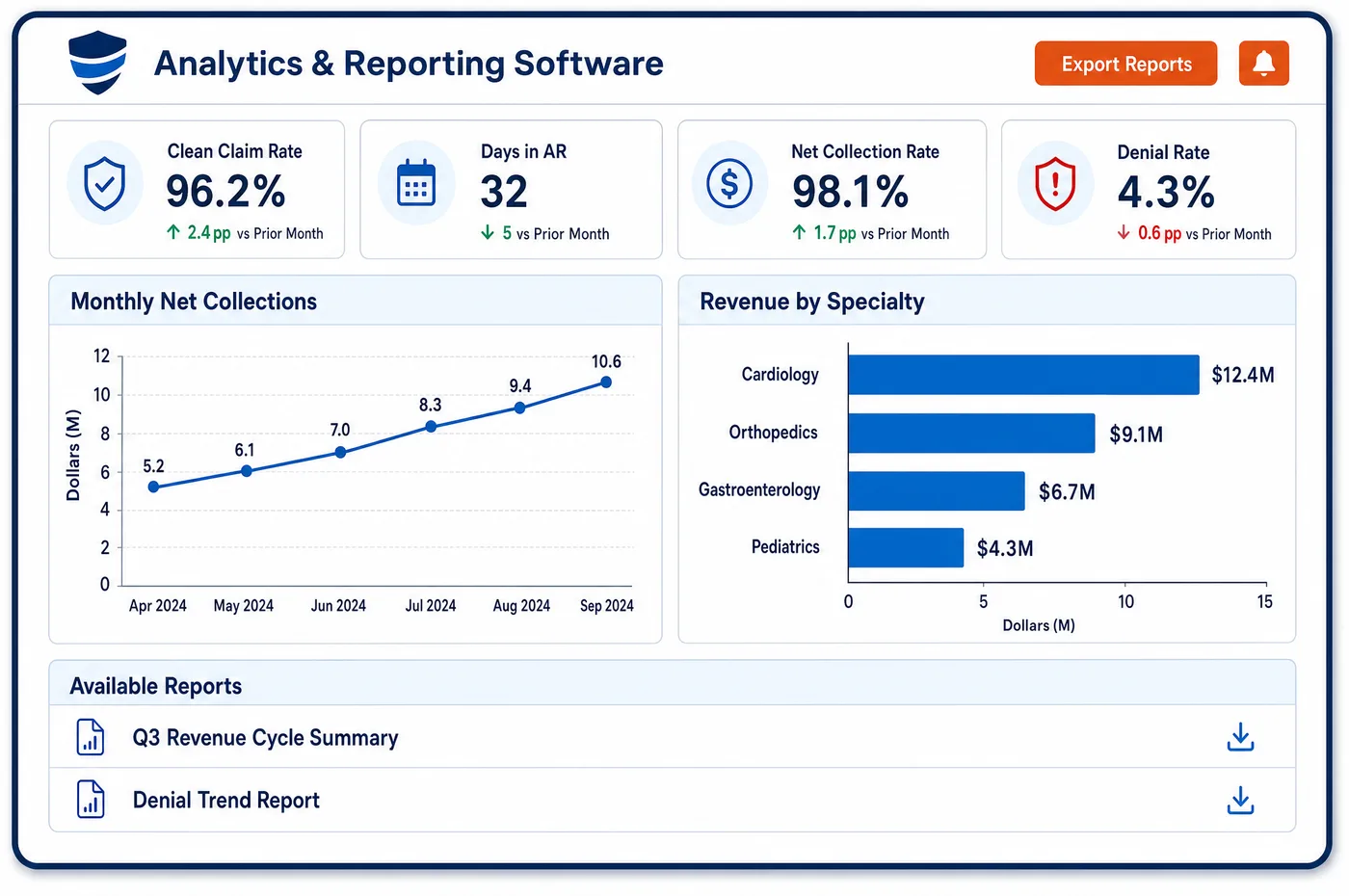
Platform System Design in a Diabetes Care Practice
A diabetes practice is often several things under one roof. There may be an endocrinology clinic, a primary care group with a diabetes program, a hospital outpatient education service and a dietitian practice. Each bills in its own way. A hospital program bills DSMT on the institutional claim with revenue code 942, while a physician office bills the same G codes on the professional claim. Platform system design starts by modeling that structure. Each site and program has its own billing provider, accreditation, claim format and payer settings, held in one database. Each charge carries its site and program, so reports never blur a class with a clinic visit. The data model keeps every change rather than overwriting it, so an account's history can be read line by line. Capacity grows as volume does, and staff reach the system from a browser. Access follows each person's role and site, and payment data is handled under the PCI standard.
Why Is Platform System Design Different in Diabetes Care?
Program setup is a design question in diabetes care. Accreditation belongs to the program, the dietitian must be enrolled, and the claim form follows the setting. If a platform stores these as free-text notes, they are lost the next time staff change. In a good platform system design they are fields on the site or program, and each claim reads them when it is built. That is how a class is billed correctly without anyone recalling the rule.
History matters for the same reason. Diabetes rules count past events, such as hours used this year, CGM reviews billed this month and the last A1c date. A platform that overwrites records cannot answer those counts. A platform that keeps every change can show what was true on any date. That history also serves audits, payer recoupments and supplier requests for documentation, which arrive long after the visit.
Security and scale complete the picture. Patient data is protected under the HIPAA Security Rule, so access should be limited to what each role needs and each access should be logged. Month-end and quarter-end volumes spike, and a cloud platform has to handle them without slowing staff down. These design choices support healthcare accounting and reporting, which depend on clean and complete records.
What Diabetes Care Platform System Design Handles
- Accredited program as a site setting
- Medicare covers training only from a program accredited by a CMS-approved organization, and the program holds the accreditation. The program is a record in the platform, and its details are read by every class claim. (CMS MLN Fact Sheet MLN909381: Provider Information on Medicare Diabetes Self-Management Training)
- Institutional and professional claim formats
- A hospital outpatient DSMT program bills on the institutional form with revenue code 942, and a physician office uses the professional form. The claim format is set per site, so each program's claims are built in the right shape. (CMS Medicare Claims Processing Manual, Chapter 18, Section 120: Diabetes Self-Management Training Services)
- Referral and attendance records
- Medicare pays for training only for sessions the patient attended, and the program keeps the referral and the attendance sheets. The platform stores both on the patient record under the program. (CMS Medicare Benefit Policy Manual, Chapter 15, Section 300: Diabetes Self-Management Training Services)
- CGM and device history
- Medicare's glucose monitor policy ties coverage to visits every six months and documented use. Visit dates are kept as dated history, so the record shows what was true when a supplier or auditor asks. (CMS Medicare Coverage Database: LCD L33822, Glucose Monitors)
- Payment data and PCI
- Card payments fall under the PCI Data Security Standard. The platform keeps card data in the payment service, not in the patient record, so patient accounts hold only the payment result. (PCI Security Standards Council: PCI Data Security Standard)
- X12 transaction handling
- Eligibility, status, claims and payments move as X12 transactions. The platform logs each one against the patient and the claim, so an exchange can be traced from end to end. (X12 Transaction Sets (270/271, 276/277, 835, 837))
How Does Diabetes Care Platform System Design Work?
1. Model the sites and programs
Each clinic, education program and nutrition service is set up with its billing provider, claim format and payer settings. Platform system design places these on the site, not in notes.
2. Tag every charge
Each charge carries its site, program and rendering provider. Reports and posting rules use those tags, so program revenue stays separate.
3. Keep every change
Edits are recorded with who made them and when. The account history can be read as it stood on any date.
4. Limit access by role
Each person sees only the sites and functions their job needs, and access is logged under HIPAA rules. Managers review the roles on a regular basis.
5. Scale with volume
Cloud capacity grows when month-end or class volume spikes, so staff keep working at the same speed. Staff reach the live data from a browser at any site.
Diabetes Care Platform System Design vs. Generic Software
| Area | Generic approach | Unlimited Systems |
|---|---|---|
| Program setup | Accreditation and enrollment kept in a binder. | Stored on the program record and read by each claim. |
| Claim format | One format for all sites. | Institutional or professional format set per site. |
| History | Records overwritten on edit. | Every change kept, with the date and the user. |
| Access | Everyone sees every account. | Access limited by role and site, with logging. |
| Growth | A new server for each new site. | One platform that scales with volume. |
Who Uses It in a Diabetes Care Practice
- Practice owner: One platform for clinic, education and nutrition services, with each program's revenue kept apart for analytics and integrated payments, and security and uptime handled in the platform.
- Compliance lead: A full change history and role-based access log, which supports audits, supplier requests and payer reviews of past claims.
- IT or integration lead: A single data model that every site uses, so a new location or program is added as a setup, not as a new system.
Diabetes Care Platform System Design FAQs
Platform system design is the cloud architecture that holds a practice's sites, programs and patient records in one database. For diabetes care it models clinics, accredited education programs and nutrition services, tags each charge with its site and program, keeps every change and limits access by role.
Program details such as accreditation, dietitian enrollment and claim format decide how a service is billed. When they sit on the program record, every claim reads them automatically. When they sit in notes, they are lost when staff change, and class claims are denied for setup errors.
Each site is set up with its own claim format and billing provider. A hospital outpatient program bills DSMT on the institutional claim with revenue code 942, and a physician office bills on the professional claim. Both sit in one database, so staff and reports see both without mixing them.
Diabetes rules count past events such as hours used and CGM reviews billed in a month. Keeping every change lets staff see what was true on any date. It also supports audits, payer recoupments and supplier documentation requests that arrive long after the visit.
Access follows each person's role and site, and each access is logged under HIPAA safeguards. Card data is handled in a payment service under the PCI standard, so the patient record holds only the result of a payment. Managers can review roles and see who opened which account.
A new clinic or education program is added as a setup in the same database, with its own claim format and payer settings. Cloud capacity grows with volume, so month-end work and busy class periods do not slow staff. Reports can roll up across sites or split by site.
Related Diabetes Care Software
Platform & AI
In the revenue cycle
Platform System Design for related specialties
Sources
- CMS MLN Fact Sheet MLN909381: Provider Information on Medicare Diabetes Self-Management Training
- CMS Medicare Claims Processing Manual, Chapter 18, Section 120: Diabetes Self-Management Training Services
- CMS Medicare Benefit Policy Manual, Chapter 15, Section 300: Diabetes Self-Management Training Services
- CMS Medicare Coverage Database: LCD L33822, Glucose Monitors
- PCI Security Standards Council: PCI Data Security Standard
- X12 Transaction Sets (270/271, 276/277, 835, 837)
GET STARTED
See Unlimited Systems in Action
Whether you're actively evaluating new technology or simply preparing for your next vendor renewal, Unlimited Systems can help you understand where your current workflows may be creating avoidable revenue risk.