

Front office
Chronic Care Patient Management Software
Keep each enrolled patient's consent, care plan, programs and monthly care time on one record, from the initiating visit to the month they stop.
Chronic Care Patient Management Software keeps the whole care management story for each patient on one record. It holds consent, the initiating visit, care plan versions, the programs the patient is enrolled in, and the time or device days logged each month, so staff know who is active and what can be billed.



 6,500+ specialty providers
Patient Management in a Chronic Care Practice
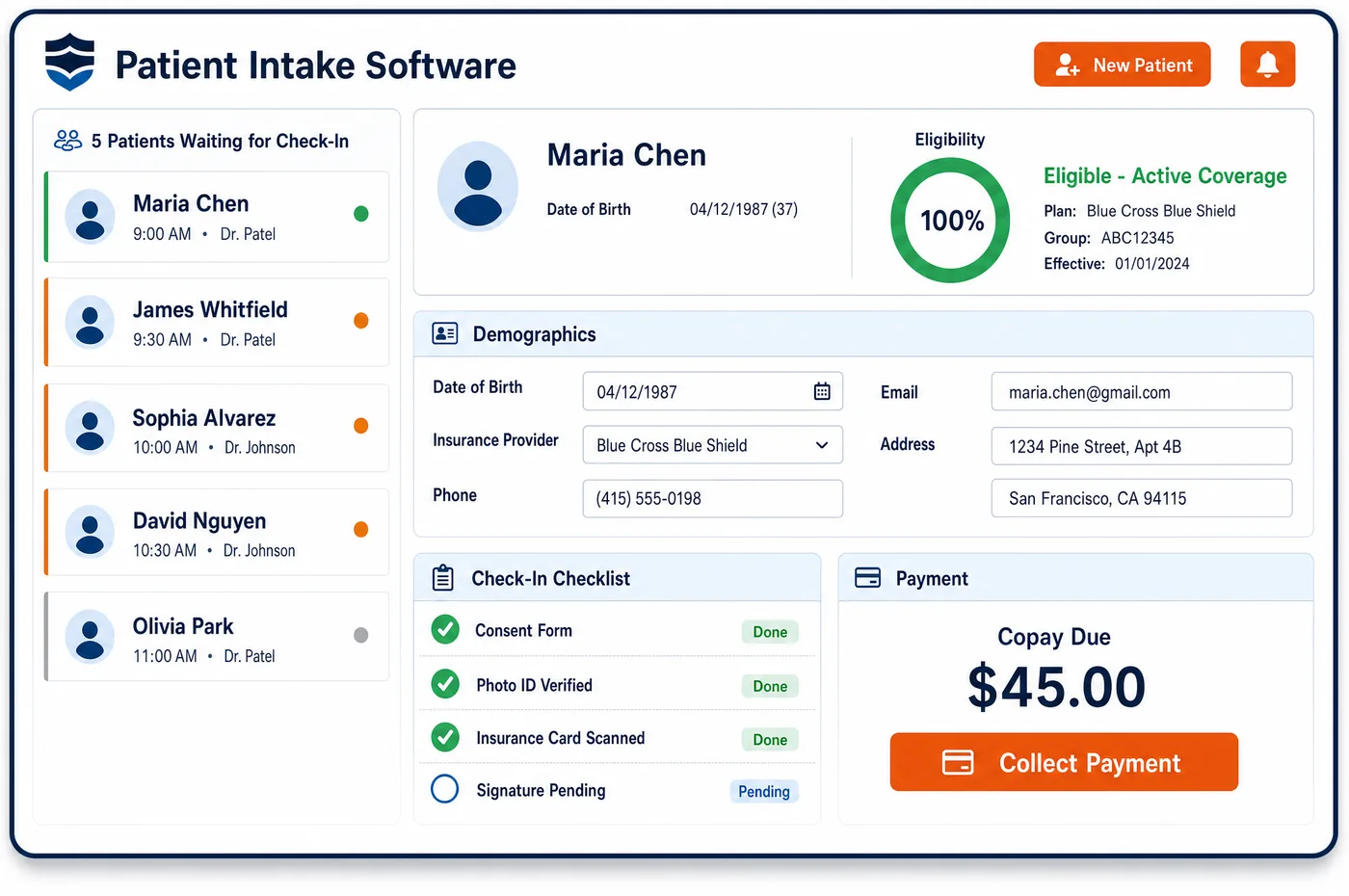
A chronic care patient stays on the books for months or years, not for one visit. The record starts with the initiating visit, an E/M visit, annual wellness visit or initial preventive exam where care management was discussed. Next comes documented consent and a care plan built from a full assessment. From there the patient may sit in one program or several: chronic care management (CCM), principal care management (PCM), Advanced Primary Care Management (APCM) or remote physiologic monitoring (RPM). Each one has its own rules for the month. Chronic care patient management software shows them side by side on the patient record. Staff see which care team member owns the patient, when the plan was last revised, how much time has been logged this calendar month, and whether a hospital discharge has started a transitional care period. When a patient asks to stop, the stop date is set to the end of that month.
Why Is Patient Management Different in Chronic Care?
Chronic care management is billed by the month, so the patient record has to answer monthly questions. Is consent on file? Was there an initiating visit in the window the rules require? Has another practitioner already taken on CCM for this patient? A visit-based record answers none of these. Patient management in chronic care tracks enrollment as a status that runs across months, with a start, a pause and a stop.
Programs also overlap. A patient can have CCM and RPM in the same month, as long as no minute is counted twice. A hospital stay can start a transitional care period, and CCM may still be reported during it. A practitioner who bills APCM for a patient can't bill CCM, PCM or TCM for that patient in the same month, though a different practitioner can when it is medically necessary. Each of these rules depends on knowing which programs the patient is in right now.
The care team is also wider than the usual visit team. Nurses, medical assistants and care coordinators do most of the monthly work as clinical staff under general supervision. The billing practitioner owns the care plan and the claim. Patients and caregivers need a named contact and access to the team at any hour. Chronic care patient management has to show each person their part without losing the thread of the patient's year.
What Chronic Care Patient Management Software Handles
- Initiating visit before CCM starts
- New patients, and patients the practitioner hasn't seen in the past year, need an initiating visit before CCM can begin. It can be a comprehensive E/M visit, an annual wellness visit or an initial preventive physical exam, and CCM must be discussed during it. The record stores that visit so staff know enrollment can open. (CMS MLN Booklet: Chronic Care Management Services (MLN909188))
- Consent captured once per practitioner
- Verbal or written consent is documented once, unless the patient switches to a different CCM practitioner. The record keeps what the patient was told: that the service is available, that cost sharing may apply, that only one practitioner can bill CCM in a calendar month, and that they can stop at any time. (CMS MLN Booklet: Chronic Care Management Services (MLN909188))
- Electronic comprehensive care plan
- CCM calls for an electronic, patient-centered care plan built from a physical, mental, cognitive, psychosocial, functional and environmental assessment. Each revision stays linked to the record, and a copy goes to the patient or caregiver when needed. (CMS MLN Booklet: Chronic Care Management Services (MLN909188))
- APCM focal-point practitioner (G0556, G0557, G0558)
- APCM is billed by the practitioner responsible for all of the patient's primary care. The record names that practitioner and the APCM level, so the same practitioner doesn't also bill CCM, PCM or TCM for the patient that month. (Federal Register: CY 2025 Physician Fee Schedule final rule (December 9, 2024), Advanced Primary Care Management services)
- RPM alongside care management
- Remote physiologic monitoring requires an established patient relationship and can run with CCM, PCM or TCM if time and effort are not counted twice. The record shows RPM enrollment next to the care management programs, so the minutes stay separate. (CMS MLN Booklet: Telehealth & Remote Monitoring (MLN901705))
- Transitional care after discharge (99495, 99496)
- A discharge from an inpatient stay starts a transitional care management period. CMS allows CCM codes 99487, 99489, 99490 and 99491 to be reported for services during that period, so the record flags the overlap rather than pausing CCM. (CMS MLN Booklet: Chronic Care Management Services (MLN909188))
How Does Chronic Care Patient Management Software Work?
1. Open the record at the initiating visit
The visit where care management is discussed starts the program record. Its date, its type and the practitioner who saw the patient are stored, so the team knows enrollment is allowed. Chronic care patient registration has already confirmed the coverage and demographics behind it.
2. Record consent and the care plan
Staff document consent and the points the patient was told. The care plan is then built and linked to the record, along with the named care team member the patient can reach. Forms gathered during patient intake for care management attach here too.
3. Enroll in the right programs
The patient is placed in CCM, PCM, APCM or RPM, or a mix that the rules allow. Each program shows its billing practitioner, its start month and the rules that limit what can be billed beside it.
4. Track the month as it runs
Logged time and device days add up on the record during the calendar month. Staff can see who is close to a code threshold and who still needs a call before the month closes.
5. Handle transitions and stops
A hospital discharge, a move to another CCM practitioner or a switch to APCM changes what can be billed. Staff update the record, and a request to stop takes effect at the end of the calendar month.
Chronic Care Patient Management Software vs. Generic Software
| Area | Generic approach | Unlimited Systems |
|---|---|---|
| Enrollment status | A note in the chart says the patient is in CCM. | Each program has a start month, a status and a stop date on the patient record. |
| Consent | A scanned form nobody can find at audit time. | Consent date, method and talking points stored with the program. |
| Care plan | A care plan saved as a static file in the chart. | Care plan versions linked to the record, with the last revision date in view. |
| Overlapping programs | Staff remember which programs can run together. | The record shows every active program, so overlaps are visible before billing. |
| Monthly time | Minutes kept on a spreadsheet beside the EHR. | Staff log minutes on the record, and totals show by program for the calendar month. |
Who Uses It in a Chronic Care Practice
- Care coordinator or nurse: One view of each enrolled patient, with the plan, the month's logged time and the next contact due. Care management outreach reminders read from the same record.
- Billing practitioner: A clear list of the patients they are responsible for, the programs each one is in, and whose care plan is due for review.
- Practice manager: A count of enrolled patients by program and status, so staffing matches the panel and stopped patients come off the monthly run.
Chronic Care Patient Management Software FAQs
A chronic care patient management record holds the initiating visit, documented consent, the electronic care plan and its revisions, and every program the patient is in. It also names the billing practitioner and the care team member the patient can reach. During each calendar month, logged time and device days build up on the same record, so staff can tell what is ready to bill.
For CCM, CMS requires an initiating visit for new patients and for patients the practitioner hasn't seen within the previous year. For APCM, new patients and patients not seen by the billing practitioner within three years need one. For PCM, CMS requires another initiating visit after one year to keep the services going. The record keeps these dates so staff know which rule applies.
Medicare allows remote physiologic monitoring to be billed in the same month as CCM, PCM or TCM, as long as no time or effort is counted twice. A practice can't bill RPM and remote therapeutic monitoring together, though. The patient record shows both programs, and minutes logged for RPM treatment management stay apart from CCM minutes.
Patients can stop CCM at any time, and the stop takes effect at the end of the calendar month. Staff record the request and its date on the patient record. The current month can still be billed if the time threshold and other rules were met. After that, the patient leaves the monthly billing run unless they enroll again.
The billing practitioner can be a physician, nurse practitioner, physician assistant, clinical nurse specialist or certified nurse-midwife. Clinical staff, who are employees or people under contract with the billing practitioner, can furnish the services under general supervision, subject to state law and scope of practice. The patient also has a named care team member for routine contact.
A discharge from an inpatient stay can start a transitional care management period. CMS lets CCM codes 99487, 99489, 99490 and 99491 be reported for services in that period, but no time can count toward both services. A practitioner who bills APCM can't also bill TCM for that patient in the same month. The record flags the discharge so the team can follow up.
Related Chronic Care Software
Front office
Patient Management for related specialties
Sources
- CMS MLN Booklet: Chronic Care Management Services (MLN909188)
- CMS MLN Booklet: Telehealth & Remote Monitoring (MLN901705)
- CMS MLN Booklet: Transitional Care Management Services (MLN908628)
- Federal Register: CY 2025 Physician Fee Schedule final rule (December 9, 2024), Advanced Primary Care Management services
- CMS: Advanced Primary Care Management (APCM) Services FAQ
GET STARTED
See Unlimited Systems in Action
Whether you're actively evaluating new technology or simply preparing for your next vendor renewal, Unlimited Systems can help you understand where your current workflows may be creating avoidable revenue risk.