
Analytics & value-based care
Chronic Care Value-Based Care Software
Connect monthly care management to the programs that reward results: the Shared Savings Program, ACO REACH and LEAD, the ACCESS Model, APCM and MIPS.
Chronic Care Value-Based Care Software links the daily work of care management to the quality and cost programs that pay for results. It tracks attributed patients, quality measures such as blood pressure and diabetes control, care gaps, risk documentation and shared-savings exposure across the Shared Savings Program, ACO REACH, LEAD, the ACCESS Model and MIPS.



 6,500+ specialty providers

Value-Based Care in a Chronic Care Practice
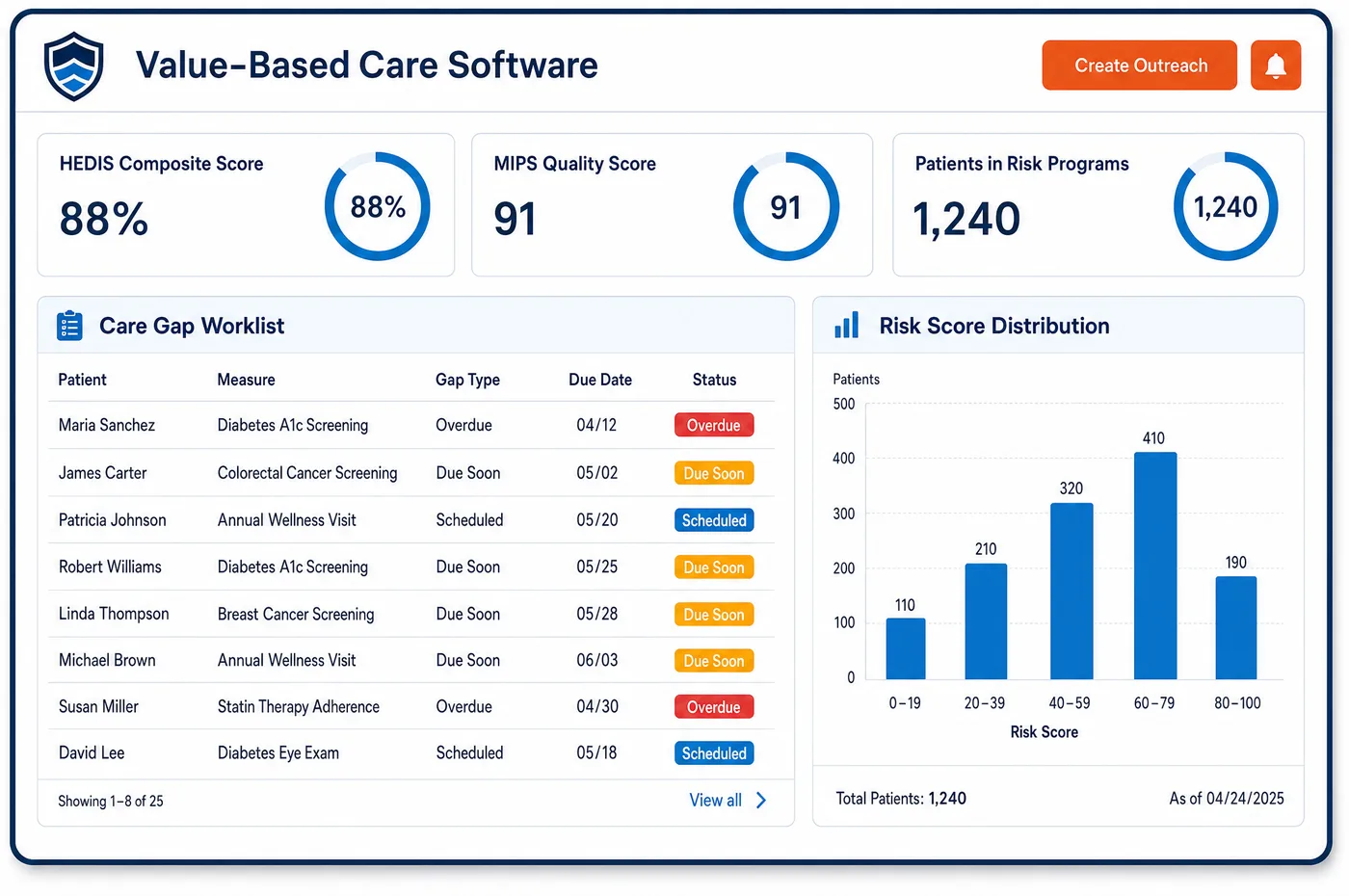
Care management and value-based contracts aim at the same goal: keeping patients with chronic conditions stable and out of the hospital. The monthly calls, care plan updates and device readings that earn CCM and RPM codes also move quality measures and admission rates. Unlimited Systems keeps both views on the same patient record. Care gaps, such as a blood pressure reading not yet recorded this year, show to staff while the patient is on a call or in the office. Chronic diagnoses that need yearly documentation for risk adjustment are flagged for the next visit. For a practice in a Shared Savings Program ACO, the panel's quality measures and admissions are tracked through the year, not discovered after it. Shared-savings and downside-risk positions sit in the ledger beside fee-for-service revenue. Practices billing APCM can track its performance requirement in the same place. As programs change, with ACO REACH ending in 2026 and LEAD starting in 2027, the same data carries across.
Why Is Value-Based Care Different in Chronic Care?
Chronic care sits at the center of most value-based programs. Patients with several chronic conditions are the ones these programs watch most closely. The APM Performance Pathway that Shared Savings Program ACOs use includes a measure of hospital admission rates for patients with multiple chronic conditions. Good care management can improve that number, but only if the practice can see which patients are slipping.
The programs are changing quickly. ACO REACH is in its final performance year in 2026, and CMS has named the LEAD Model as its successor from January 1, 2027. The ACCESS Model began on July 5, 2026, with outcome-aligned payments for tech-enabled chronic care. APCM ties monthly primary care payment to performance reporting. A practice needs data that fits whichever program it is in this year and the next.
Value-based care also changes what counts as success in a care management program. Fee-for-service rewards reaching the minute threshold. Contracts that pay for results reward the blood pressure that came down and the admission that didn't happen. The same calls serve both goals, so the program needs to track both, side by side, for the same patients.
What Chronic Care Value-Based Care Software Handles
- Medicare Shared Savings Program
- ACOs share in savings only when they also meet quality standards. Care management results for attributed patients are tracked through the year against the ACO's quality and cost goals. (CMS: About the Medicare Shared Savings Program)
- ACO REACH and the LEAD Model
- ACO REACH ends after its final performance year, 2026. LEAD, a ten-year voluntary model, follows from January 1, 2027, and its benefit enhancements include Part B cost-sharing support. (CMS Innovation Center: LEAD (Long-term Enhanced ACO Design) Model)
- ACCESS Model
- The ACCESS Model began on July 5, 2026, for Part B-enrolled organizations. Its tracks cover cardio-kidney-metabolic conditions, musculoskeletal pain, and behavioral health conditions such as depression and anxiety. Referring clinicians may bill a co-management payment for documented review of patient updates. (CMS Innovation Center: ACCESS (Advancing Chronic Care with Effective, Scalable Solutions) Model)
- APCM performance requirement (G0556 to G0558)
- Practices billing APCM must measure and report performance, either by reporting the Value in Primary Care MVP or by taking part in a Shared Savings Program ACO or ACO REACH. The same quality data supports both the payment and the requirement. (CMS: Advanced Primary Care Management Services)
- Controlling High Blood Pressure (Quality ID 236)
- This measure counts adults aged 18 to 85 with hypertension whose most recent reading was below 140/90. Readings the measure specification accepts feed the care gap list, and staff check the specification before counting home readings. (eCQI Resource Center: CMS165v14 Controlling High Blood Pressure (MIPS Quality ID 236), 2026 performance period)
- Diabetes glycemic status (Quality ID 001)
- Quality ID 001 is an inverse measure, so a lower rate is better. It counts patients with diabetes whose most recent HbA1c or GMI is above 9.0, and patients with no result this year count against the practice, so missing tests show as gaps. (eCQI Resource Center: CMS122v14 Diabetes Glycemic Status Assessment (MIPS Quality ID 001), 2026 performance period)
How Does Chronic Care Value-Based Care Software Work?
1. Know who is attributed
Patients attributed to the ACO or model are flagged on their records. Care managers can see which enrolled patients also count toward a contract.
2. Close gaps during care
Open quality gaps, such as a missing blood pressure or glycemic test this year, show during calls and visits. Staff can book the test or record the reading while the patient is engaged.
3. Document risk once a year
Chronic diagnoses that drive risk adjustment need documentation each year. Diagnoses not yet addressed this year are flagged for the next visit.
4. Watch admissions and follow-up
Hospital discharges start follow-up tasks, and admissions are tracked against the panel. A care transition can support TCM billing as well as the ACO's admission measures.
5. Track the money
Shared-savings positions, downside-risk caps and model payments sit in the ledger beside fee-for-service revenue. Chronic care accounting books each in its own account.
Chronic Care Value-Based Care Software vs. Generic Software
| Area | Generic approach | Unlimited Systems |
|---|---|---|
| Quality gaps | Found at year-end submission. | Shown on the record during calls and visits. |
| Program changes | Each new model set up from scratch. | One patient record serves the Shared Savings Program, REACH, LEAD, ACCESS and MIPS. |
| Risk documentation | Chronic diagnoses dropped when not restated. | Diagnoses not yet documented this year flagged for the next visit. |
| Admissions | Learned about from a payer report long after the fact. | Discharges start follow-up tasks as notices arrive. |
| Contract finances | Shared savings modeled in a consultant's spreadsheet. | Savings and risk positions tracked in the ledger. |
Who Uses It in a Chronic Care Practice
- Care manager: Quality gaps and attributed status on each patient, so a routine call can also close a gap.
- Medical director: Panel results on blood pressure, diabetes control and admissions through the year, with time left to act on them. Trends feed care management analytics.
- Practice owner: Program and contract finances in one ledger, and data that carries over as models such as ACO REACH give way to LEAD.
Chronic Care Value-Based Care Software FAQs
Value-based care software ties care management work to the programs that reward outcomes. It shows quality gaps, attributed status and risk documentation needs on the same record staff use for CCM. Calls and visits can close gaps as they happen. The practice then sees both its monthly billing and its contract results for the same patients.
ACO REACH is in its final performance year in 2026, and CMS is not taking new applications. CMS has named the LEAD Model, a ten-year voluntary ACO model that starts on January 1, 2027, as its successor. Practices in REACH ACOs should confirm their ACO's plan for 2027, whether LEAD, the Shared Savings Program or neither.
ACCESS is a ten-year CMS Innovation Center model for tech-enabled chronic care that began on July 5, 2026. Participating organizations must be enrolled in Medicare Part B. They receive recurring outcome-aligned payments for managing qualifying conditions. Primary care and other referring clinicians may bill a co-management payment when they document a review of patient updates from an ACCESS organization.
Practices billing APCM must measure and report performance. CMS lets them meet this by reporting the Value in Primary Care MIPS Value Pathway, or by taking part in a Shared Savings Program ACO or ACO REACH. Because the same patients often get care management, the quality data that supports one program supports the other.
Controlling High Blood Pressure (Quality ID 236) and the diabetes glycemic status measure (Quality ID 001) respond directly to monthly care management. Shared Savings Program ACOs are also measured on hospital admission rates for patients with multiple chronic conditions. Calls that catch a rising reading or a missed refill early can move all three.
CCM can be billed for patients attributed to a Shared Savings Program ACO, and the care it pays for helps the ACO's quality and cost results. CMS notes that practices in some models or demonstrations may face extra billing limits, so staff should check model rules. The practice tracks fee-for-service revenue and contract results side by side for the same patients.
Related Chronic Care Software
Analytics & value-based care
In the revenue cycle
Value-Based Care for related specialties
Sources
- CMS: About the Medicare Shared Savings Program
- CMS Innovation Center: LEAD (Long-term Enhanced ACO Design) Model
- CMS Innovation Center: ACO REACH Model
- CMS Innovation Center: ACCESS (Advancing Chronic Care with Effective, Scalable Solutions) Model
- CMS: Advanced Primary Care Management Services
- eCQI Resource Center: CMS165v14 Controlling High Blood Pressure (MIPS Quality ID 236), 2026 performance period
- eCQI Resource Center: CMS122v14 Diabetes Glycemic Status Assessment (MIPS Quality ID 001), 2026 performance period
- CMS Quality Payment Program: APM Performance Pathway quality requirements, 2026
- CMS MLN Booklet: Chronic Care Management Services (MLN909188, June 2025)
GET STARTED
See Unlimited Systems in Action
Whether you're actively evaluating new technology or simply preparing for your next vendor renewal, Unlimited Systems can help you understand where your current workflows may be creating avoidable revenue risk.