

Billing & claims
Chronic Care Denial Management Software
Sort care management denials by cause, fix the setup behind repeat ones, and appeal with the consent and time records that support each month.
Chronic Care Denial Management Software prevents, sorts and works denials on monthly care management claims. It flags likely problems before claims go out, groups denials by cause such as a second practitioner, a same-month conflict or a coverage change, and orders open denials by value and filing deadline, with the consent and time records ready for appeal.



 6,500+ specialty providers

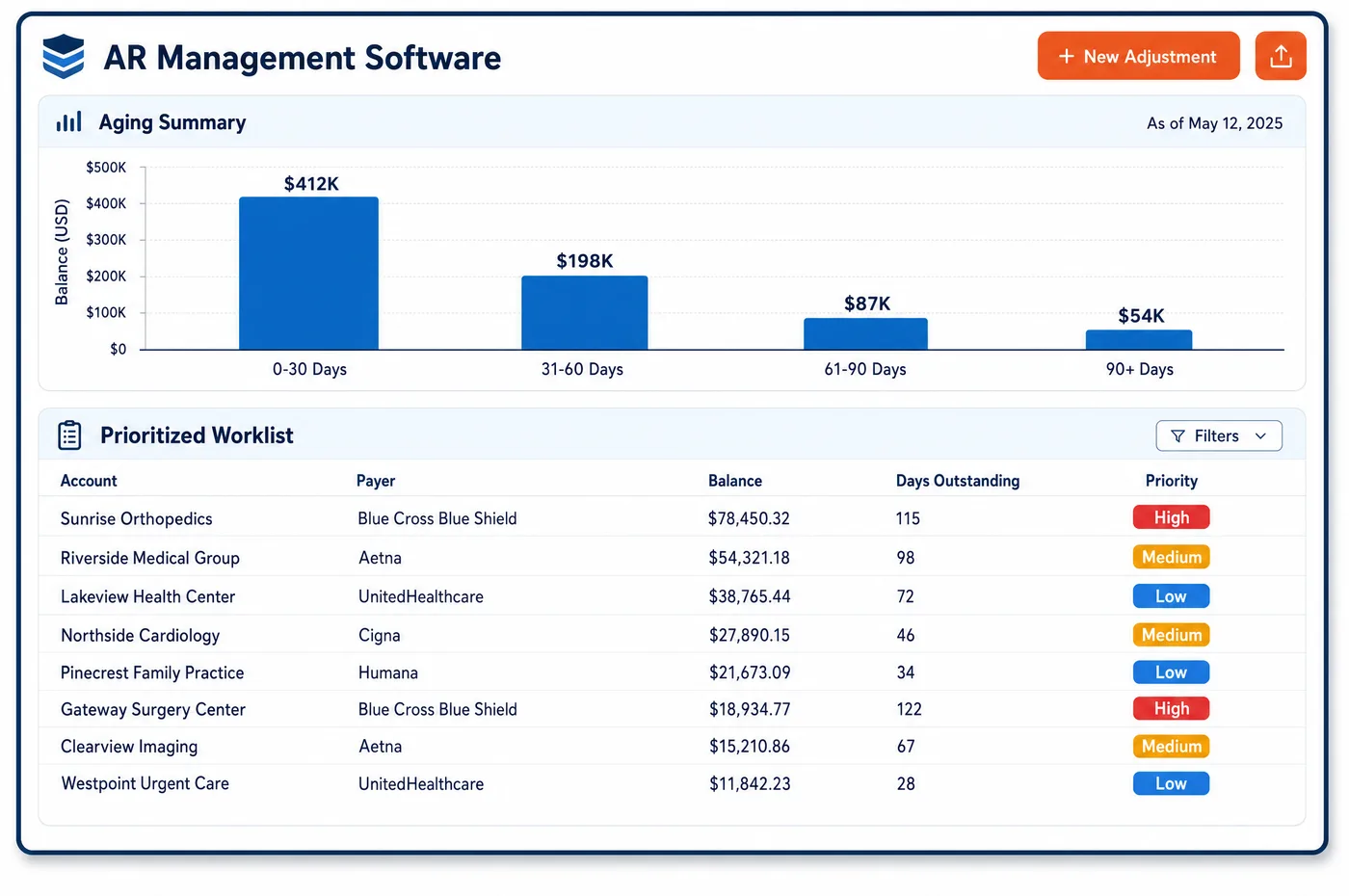
Denial Management in a Chronic Care Practice
Care management denials tend to come in clusters. One cause, such as a place of service set wrong in the claim setup, can deny a whole month's batch. Other causes are patient by patient. Another practice may have billed CCM or APCM first. The patient may have entered hospice under the practitioner's supervision, or switched to a Medicare Advantage plan that wasn't on file. Remote monitoring may have been billed by a second practitioner in the same thirty-day period. Chronic care denial management software reads the reason codes on each remittance and sorts the denial into a cause the team can act on. Coverage causes go back to clearance. Pairing causes go back to charge validation. Duplicate-practitioner causes go to a staff member who calls the patient. When an appeal makes sense, the record already holds the consent, the time entries and the care plan for that month, so the request goes in with the facts.
Why Is Denial Management Different in Chronic Care?
A care management denial is usually small, so it is tempting to write it off. But the same cause will deny next month's claim, and the month after. Denial management in chronic care has to fix the cause, not just the claim. A consent step missing from enrollment, or a code pairing set up wrong, will keep producing denials until someone changes the setup.
Some causes can't be fixed by the billing team alone. If another practitioner billed CCM for the patient first, only a conversation with the patient sorts out who is providing care. If the patient moved to a Medicare Advantage plan, coverage has to be updated and the claim sent to the right payer. These denials need a route back to the front office and the care team.
Documentation decides appeals. Care management is non-face-to-face work, so there is no visit note to point to. What supports the claim is the consent record, the care plan and the time entries showing who did what and when. When those records are complete and in one place, an appeal is quick. When they are spread across spreadsheets and vendor reports, the denial often isn't worth working.
What Chronic Care Denial Management Software Handles
- Second practitioner in the same month
- Only one practitioner can bill CCM for a patient in a calendar month, and the same holds for APCM. A denial for this cause goes to staff who confirm with the patient which practice is providing care management. (CMS MLN Booklet: Chronic Care Management Services (MLN909188))
- Same-period conflict denials
- CCM can't be billed in the same service period as home health supervision (G0181), hospice supervision (G0182) or certain ESRD services (90951 to 90970). These denials route back to care management charge validation, where the pairing check is updated. (CMS MLN Booklet: Chronic Care Management Services (MLN909188))
- Reason codes on the remittance
- Each denial carries a claim adjustment reason code. CARC 97 means the service is included in another service already adjudicated, and CARC 18 means an exact duplicate claim. The code sets the work queue. (X12 Claim Adjustment Reason Codes)
- Remote monitoring duplicates
- Only one practitioner can bill remote monitoring for a patient in a thirty-day period, and RPM and remote therapeutic monitoring can't be billed together. These denials go to the care team to confirm which practice runs the patient's device. (CMS MLN Booklet: Telehealth & Remote Monitoring (MLN901705))
- Medicare timely filing
- Medicare claims must be filed within one calendar year after the date of service. Corrected care management claims are worked in order of that deadline, so a fixable month isn't lost to the timely filing limit. (eCFR: 42 CFR 424.44, Time limits for filing claims)
- First-level appeal
- A Medicare redetermination is filed with the MAC that made the initial decision, by form or written request, within a set window after the notice is received. The appeal packet pulls the month's consent, care plan and time entries. (CMS: First Level of Appeal, Redetermination by a Medicare Contractor)
How Does Chronic Care Denial Management Software Work?
1. Catch problems before submission
Claims are checked against the patient's programs, consent and same-month services before they go out. Likely denials are held for a fix, the cheapest point to stop one.
2. Sort denials by cause
Each denial's reason code maps to a cause: coverage, pairing, duplicate practitioner, documentation or setup. The cause decides who gets the work.
3. Route to the owner
Coverage causes go to chronic care financial clearance. Pairing and setup causes go to billing, and duplicate-practitioner causes go to the care team.
4. Work by value and deadline
Open denials are ordered by amount and filing deadline. Batch denials from one setup error are fixed and resent together.
5. Appeal and report
Appeals go in with the consent, care plan and time entries for the month. Causes are tracked over time in care management denial reporting, so leaders see whether fixes held.
Chronic Care Denial Management Software vs. Generic Software
| Area | Generic approach | Unlimited Systems |
|---|---|---|
| Small denials | Written off because each one is small. | Grouped by cause, so the setup behind them is fixed. |
| Duplicate practitioner | Resent and denied again. | Routed to the care team to confirm with the patient. |
| Batch errors | Worked one claim at a time. | Fixed once and resent as a group. |
| Appeal records | Pulled from spreadsheets and vendor emails. | Consent, care plan and time entries in one record. |
| Deadlines | Found after the filing limit passed. | Open denials worked in order of filing deadline. |
Who Uses It in a Chronic Care Practice
- Denial specialist: A queue sorted by cause, value and deadline, with the month's records attached to each denial.
- Care team lead: Duplicate-practitioner and device denials routed to them with the patient's details, so one call can settle the question.
- Revenue cycle director: Denial causes trended across months, so the program can show that a fix worked. The full cycle view sits in chronic care RCM.
Chronic Care Denial Management Software FAQs
Chronic care denial management often deals with a few repeat causes: another practitioner billing CCM or APCM in the same month, a same-period conflict such as hospice supervision, a coverage change the practice didn't know about, and claim setup errors that hit a whole batch. Sorting denials by cause shows which ones need a setup fix and which need a call to the patient.
Only one practitioner can bill CCM for a patient each calendar month. When a denial points to another practice, staff call the patient to learn who is providing care management. If the patient wants to stay with the practice, the consent and care plan show the relationship. If not, the program is stopped and future claims are held.
A care management appeal is supported by the patient's consent record, the care plan and the time entries for the month. The entries should show who did the work, what they did and how long it took. Because care management is non-face-to-face, these records take the place of a visit note in showing the service was provided.
Medicare claims generally must be filed within one calendar year after the date of service. A care management month that was held or denied for a fixable reason should be corrected well inside that limit. Working open denials in order of filing deadline keeps fixable months from being lost.
The first level of a Medicare Part B appeal is a redetermination by the Medicare Administrative Contractor that made the initial decision. It can be filed with form CMS-20027 or a written request that names the patient, the services and the reason for disagreement. Most MACs accept appeals online through their portals.
Many care management denials can be prevented before submission. Claims are checked against consent, the patient's programs, same-month services and the code pairing rules. Coverage is re-checked across the enrolled panel each month. Problems found at this point are fixed in minutes, rather than worked as denials later.
Related Chronic Care Software
Billing & claims
In the revenue cycle
Denial Management for related specialties
Sources
GET STARTED
See Unlimited Systems in Action
Whether you're actively evaluating new technology or simply preparing for your next vendor renewal, Unlimited Systems can help you understand where your current workflows may be creating avoidable revenue risk.