

Multi-Specialty Patient Scheduling Software
Coordinate appointments, rooms, and providers across every department.
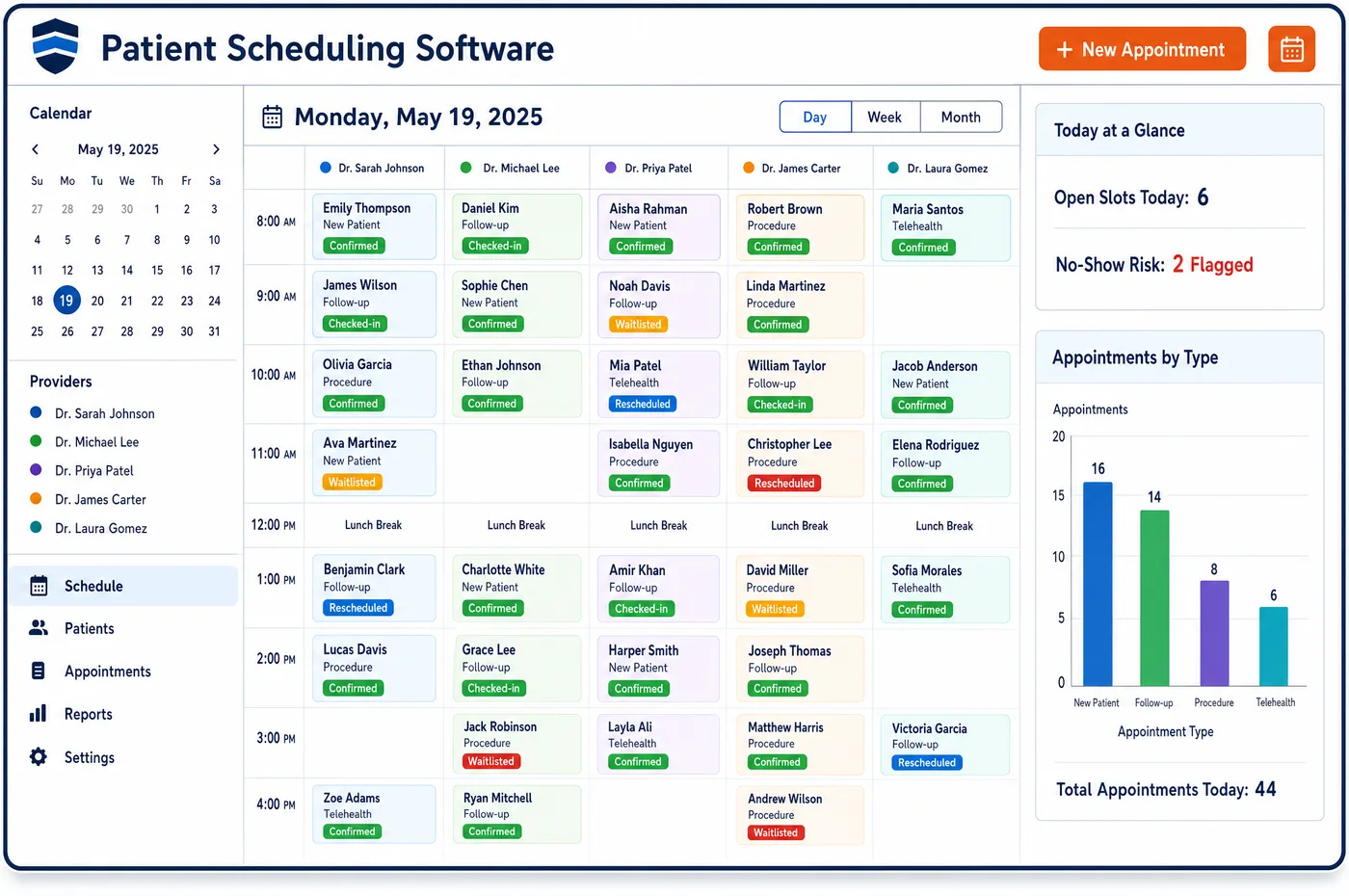
Multi-specialty scheduling coordinates visits across departments, shared rooms and equipment, and same-day multi-visit itineraries for patients who see several specialists.


 6,500+ specialty providers
Multi-Specialty Patient Scheduling Software for Multi-Specialty
Built specifically for Multi-Specialty practices, not bolted onto a multi-specialty platform, so every rule matches how your team actually gets paid.
Specialty-tuned accuracy
Coding and prior-auth logic tuned to Multi-Specialty catches problems before claims go out.
Faster, fuller payment
Automated charge capture and posting speed up cash flow and recover dollars you're leaving on the table.
Work by exception
Automation clears the routine work so your team only touches the claims that need a human.
One system of record
Scheduling, clinical, and financial data live in one place, for a single real-time view of performance.
Deep Dive: System Capabilities & Specialized Workflows
Departments in a multi-specialty group often share space, imaging, and support staff, and patients benefit from seeing several specialists in one trip. When each department schedules independently, rooms are double-booked, shared resources sit idle, and patients make repeated trips.
Configured Automation Highlights
- Shared rooms and equipment scheduled across departments.
- Multi-visit itineraries for patients seeing several specialists.
- Internal referral appointments offered before the patient leaves.
- Department-specific visit types and durations maintained.
Direct Comparison
Review the module against your payer mix and current team handoffs.
Frequently Asked Questions
Hear It From Our Clients
Specialty practices describe, in their own words, what changed after moving to Unlimited Systems.

“As I look back at the transition, the support and the collaboration with the folks at Unlimited really helped make us feel at ease. We had a partner that really wanted us to be successful.”
- CEO
- Days in A/R shrank from 21 to 15, consistently.
- Charges go out the next day.
- Less manual work, more clean claims, and stronger cash flow.
We Love Hearing From Our Users
Using our product doesn't just mean quality software, but also access to a community to keep you connected to your peers and to your product team.

The system continues to grow with features as it should, with how healthcare changes. So, if you are looking for a company that is innovative and truly cares, I would recommend Unlimited Financials.
Unlimited Financials has been the easiest and best practice management system I have used. It is easy to navigate and do what I need to do.
We have been on Unlimited Financials for over three years and love it. Our claims are being processed faster and more efficiently, which means we are receiving payment more quickly.
Unlimited Financials has allowed us to extend our workforce in some areas due to the workflow efficiencies and given a better patient experience.
Knowledge of the patient's coverage has been a game changer. The ability to verify benefits before the patient comes in has saved us on time and denials, so there is no delay in treatment.
Using Unlimited Systems has allowed us to get a much better handle on our AR and claim management.
The system continues to grow with features as it should, with how healthcare changes. So, if you are looking for a company that is innovative and truly cares, I would recommend Unlimited Financials.
Unlimited Financials has been the easiest and best practice management system I have used. It is easy to navigate and do what I need to do.
We have been on Unlimited Financials for over three years and love it. Our claims are being processed faster and more efficiently, which means we are receiving payment more quickly.
Unlimited Financials has allowed us to extend our workforce in some areas due to the workflow efficiencies and given a better patient experience.
Knowledge of the patient's coverage has been a game changer. The ability to verify benefits before the patient comes in has saved us on time and denials, so there is no delay in treatment.
Using Unlimited Systems has allowed us to get a much better handle on our AR and claim management.
GET STARTED
Your specialty isn't generic. Your software shouldn't be either.
Walk through your specialty's exact billing workflows with an RCM expert who already knows your codes, modifiers, and payer rules.