

Analytics & value-based care
Behavioral Health Reporting Software
Build, schedule and send CCBHC measure, grant, payer and board reports from live billing and clinical data.
Behavioral Health Reporting Software builds the standard, ad hoc and required reports a behavioral health organization sends to its board, its funders, its payers and the state. It pulls CCBHC quality measure data, grant spending, payer performance and clinician productivity from live data, and delivers each report on a schedule to the people who need it.



 6,500+ specialty providers
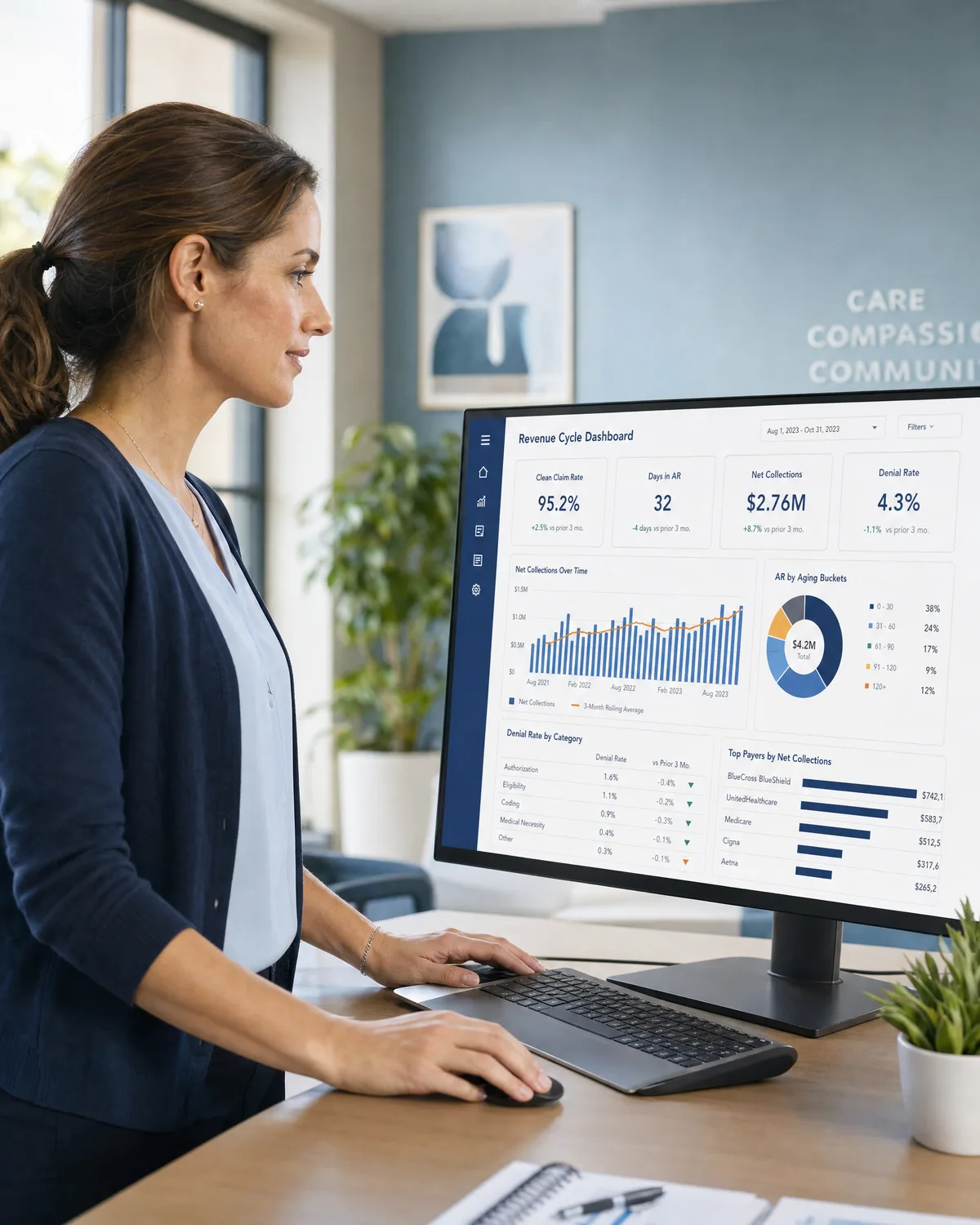
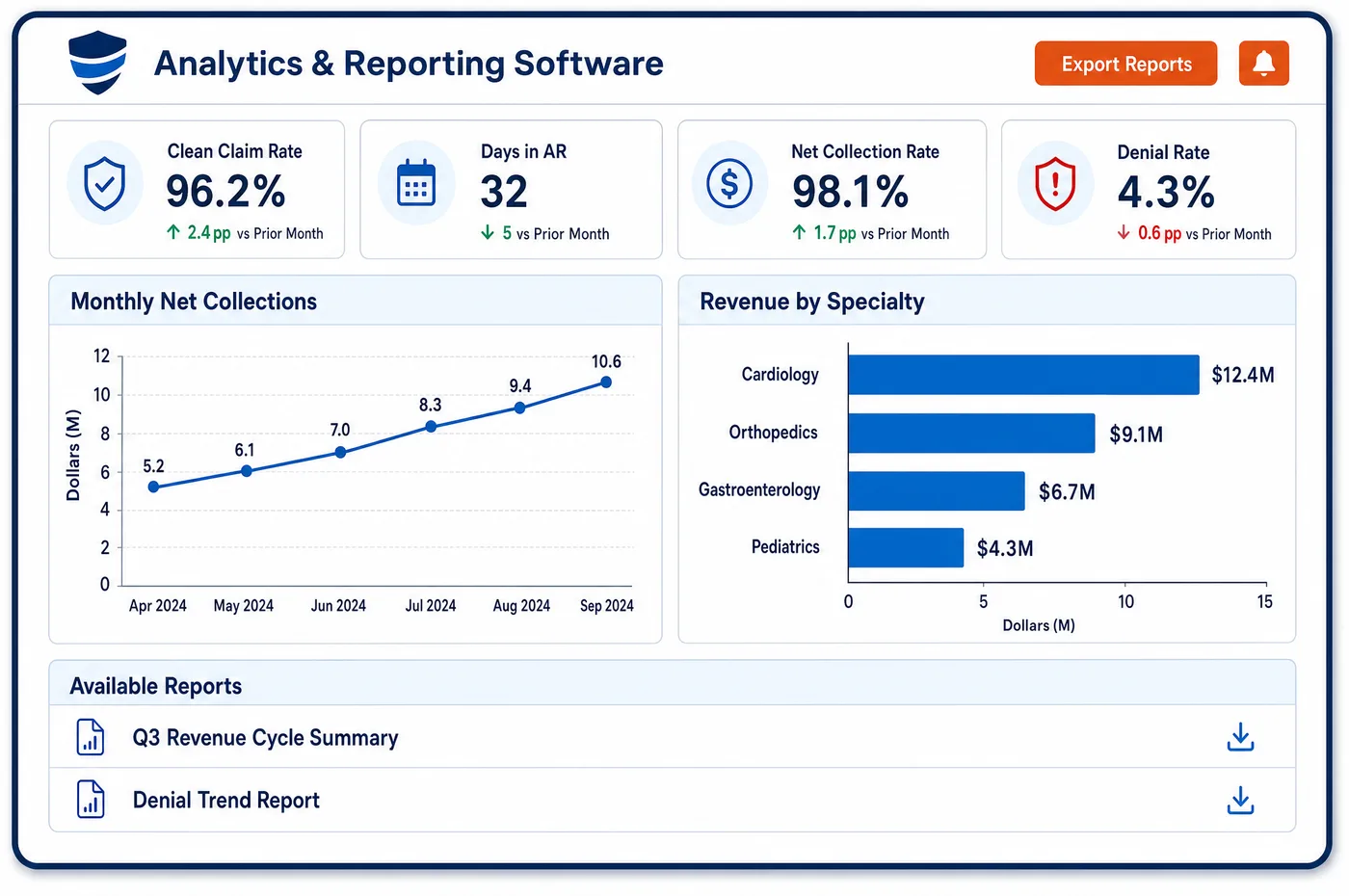
Reporting in a Behavioral Health Practice
A behavioral health organization reports to more audiences than most. The board wants revenue and access. A state CCBHC program wants quality measures each Measurement Year, split by age group, Medicaid status, race and ethnicity. Grant funders want spending and service counts by award. Health home programs report quality measures to the state. Unlimited Systems lets staff build these reports in a report designer without writing SQL. Each one reads from live billing, scheduling and clinical data, so figures match the ledger. Reports are scheduled and sent as secure PDF or CSV files to executives, program leads and funders. Clinic-collected CCBHC measures, such as depression remission at six months, draw on scores and dates already in the record. Payer reports show yield, denials and AR by plan. Large organizations can also sync the same data to their own data warehouse. Reporting then becomes routine work, not a scramble at each deadline.
Why Is Reporting Different in Behavioral Health?
Reporting is part of how behavioral health is funded. CCBHC programs require quality measure reporting, and states may tie quality bonus payments to some of those measures. Federal grants require financial reports for each award. Health homes report measures to the state, and county or state contracts often ask for monthly service counts. Missing or late reports can put funding at risk, so the reporting calendar matters as much as the billing calendar.
The CCBHC measures are detailed. Clinic-collected measures such as Time to Services (I-SERV), Depression Remission at Six Months (DEP-REM-6), unhealthy alcohol use screening (ASC), screening for social drivers of health (SDOH) and depression screening (CDF-AD and CDF-CH) come from the clinic's own records. State-collected measures such as FUH, FUM and IET come from Medicaid claims. Each is stratified in set ways, and each has its own data-reporting template.
Data sits in several places. Clinical scores live in the EHR, visit dates in scheduling, and payments in billing. Grant spending may sit in the accounting system. When reports are built from exports, each one takes days of manual work and no one can rebuild the number later. Reporting for behavioral health works best when every report reads from the same live data and can be traced back to it.
What Behavioral Health Reporting Software Handles
- Clinic-collected CCBHC measures
- I-SERV, DEP-REM-6, ASC, SDOH and CDF-AD and CDF-CH are required clinic-collected measures in the SAMHSA manual. Reports pull the dates, scores and screenings behind each one from live data. (SAMHSA: Quality Measures for Behavioral Health Clinics, Technical Specifications and Resource Manual (2024))
- Measure stratification
- I-SERV and DEP-REM-6 are stratified by adolescent or adult, Medicaid-only or other coverage, ethnicity and race. Reports group results the same way, so they match the data-reporting template. (SAMHSA: Quality Measures for Behavioral Health Clinics, Technical Specifications and Resource Manual (2024))
- Quality bonus payment measures
- States that make CCBHC quality bonus payments must use at least the first seven comparative measures, and a clinic must meet the state threshold first. Reports show progress on those measures during the year. (Medicaid.gov: CCBHC Prospective Payment System and Quality Bonus Payments)
- Federal award financial reporting (2 CFR 200.302)
- Recipients must be able to disclose the financial results of each federal award. Grant reports read revenue and cost by program and award from the ledger. (2 CFR 200.302: Financial management (Uniform Guidance for federal awards))
- Health home quality reporting
- Medicaid health home providers must report quality measures to the state. Reports for health home members draw care coordination contacts and follow-up dates from the record. (Medicaid.gov: Health Homes (Section 1945 of the Social Security Act))
How Does Behavioral Health Reporting Software Work?
1. Build the report
Staff use the report designer to pick measures, filters and groupings without writing SQL. Saved reports can be reused each period.
2. Read live data
Each report reads from billing, scheduling and clinical data, so its figures match the ledger and the record. Every number can be traced to its source.
3. Schedule and send
Reports go out on a schedule as secure PDF or CSV files to board members, program leads, funders and payers. Access controls decide who gets which report.
4. Prepare required submissions
CCBHC measures, grant reports and state service counts are prepared from the same data. Each report keeps a record of the data it used, which supports HEDIS-based measures such as FUH.
5. Look into the results
When a figure looks wrong, staff move to analytics to find the cause. Live views of the same figures sit on dashboards.
Behavioral Health Reporting Software vs. Generic Software
| Area | Generic approach | Unlimited Systems |
|---|---|---|
| CCBHC measures | Built by hand from exports at each deadline. | Pulled from live data and grouped to match the template. |
| Grant reports | Spending rebuilt from spreadsheets. | Revenue and cost by award read from the ledger. |
| Board reports | Emailed by hand, often out of date. | Scheduled and sent as secure PDF or CSV files. |
| Audit trail | Nobody can rebuild last quarter's number. | Every figure traced back to its source data. |
| Data warehouse | Separate extracts for each analyst. | The same data synced to the organization's warehouse. |
Who Uses It in a Behavioral Health Practice
- Quality director: CCBHC and health home measures prepared from live data, stratified the way the state template asks.
- Grants manager: Spending and service counts by award, ready for each funder report without a rebuild.
- Board and executives: Scheduled reports on access, quality and finances that match the ledger, with AR by payer included.
Behavioral Health Reporting Software FAQs
Behavioral health reporting software produces board and finance reports, payer performance reports, clinician productivity reports and required submissions. Those include CCBHC quality measures, grant financial reports and state service counts. Each report reads from live billing, scheduling and clinical data, and can be scheduled and sent as a secure PDF or CSV file.
Clinic-collected measures such as I-SERV, DEP-REM-6, ASC, SDOH and depression screening are built from dates, scores and screenings in the record. Results are stratified by age group, coverage, ethnicity and race, as the SAMHSA manual requires. State-collected measures come from Medicaid claims, so the clinic's own claims data helps it see where it stands.
Grant-funded programs carry their own revenue and cost lines in the ledger. Reports read those lines by program and award, so a funder report starts from the same figures as the books. Federal rules require recipients to show the financial results of each award, and reports built from the ledger make that routine.
Reports can be scheduled to run and send on a set cycle, such as monthly board packets or quarterly funder reports. They go out as secure PDF or CSV files, and access controls decide who receives each one. Staff no longer rebuild and email the same reports by hand.
Large organizations can sync billing and reporting data to their own data warehouse, such as Snowflake, Azure Synapse or Amazon Redshift, over secure links. Analysts then work from the same data that drives the standard reports, so numbers agree across teams.
Reporting delivers known reports on a schedule, including required submissions with fixed formats. Analytics explores why a number changed, by splitting it into causes such as volume, rate and denials. Both use the same live data, so a report and an analysis of the same measure always agree, and staff can move from one to the other.
Related Behavioral Health Software
Analytics & value-based care
In the revenue cycle
Reporting for related specialties
Sources
- SAMHSA: Quality Measures for Behavioral Health Clinics, Technical Specifications and Resource Manual (2024)
- Medicaid.gov: CCBHC Prospective Payment System and Quality Bonus Payments
- 2 CFR 200.302: Financial management (Uniform Guidance for federal awards)
- Medicaid.gov: Health Homes (Section 1945 of the Social Security Act)
GET STARTED
See Unlimited Systems in Action
Whether you're actively evaluating new technology or simply preparing for your next vendor renewal, Unlimited Systems can help you understand where your current workflows may be creating avoidable revenue risk.