

Analytics & value-based care
Dermatology Value-Based Care Software
Capture the dermatology MIPS and MVP measures during the visit, from melanoma follow-up and biopsy timing to psoriasis response and biologic TB screening.
Dermatology Value-Based Care Software helps a skin practice meet the quality programs that adjust its pay. It captures MIPS and Dermatological Care MVP measures, such as melanoma recurrence tracking, biopsy reporting time, psoriasis response and TB screening before a biologic, while the patient is still in the office, and it shows the practice where it stands all year.



 6,500+ specialty providers

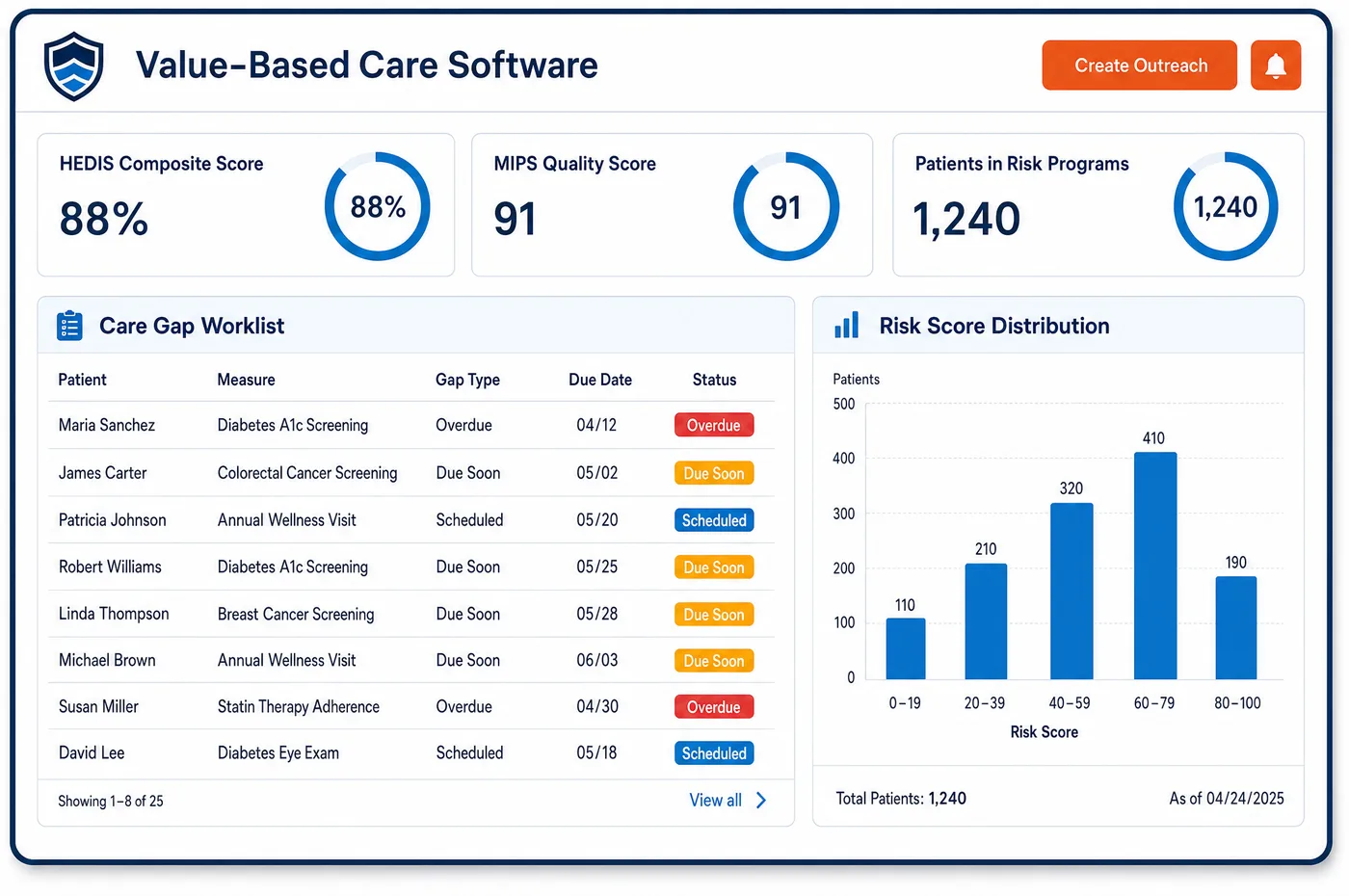
Value-Based Care in a Dermatology Practice
Most dermatology practices meet value-based care through MIPS rather than a shared-savings model. For 2026, they can report traditional MIPS or the Dermatological Care MVP, which groups measures by skin cancer and inflammatory conditions. Each measure needs a specific piece of data at a specific time. A psoriasis patient on a systemic drug needs a recorded response. A patient starting a biologic needs a TB screening on file. A melanoma patient needs a recurrence exam. Unlimited Systems ties those measure fields to visit types, so a chart missing a required field raises an alert before checkout. Care gaps, such as a melanoma patient due for a follow-up exam, appear to staff while the patient can still be booked. Measure status is tracked during the year, so the practice can see which measures it is meeting and which need work. The same data feeds the reports used to submit, through claims or a registry.
Why Is Value-Based Care Different in Dermatology?
Dermatology measures depend on details that are easy to miss. A psoriasis response measure needs a disease activity score at the right visit. Itch measures need a patient-reported score at the first visit and again at follow-up. A TB screening measure needs proof of testing before the first biologic dose. None of these happen by accident. They need a field, a prompt and a person who knows the measure exists.
Pathology timing is part of quality, too. The biopsy reporting time measure counts how quickly a pathologist sends a skin cancer result back to the clinician. AAD's QCDR adds a measure for how quickly the clinician tells the patient. Practices with an in-house dermpath lab are measured on both sides. Practices that send slides out depend on their lab's speed, which makes lab choice a quality decision as well as a financial one.
Cost counts as well as quality. The Dermatological Care MVP links a melanoma resection cost measure, which CMS calculates from claims. Practices don't submit cost data, but their care patterns drive it. MIPS results for the 2026 performance year adjust Medicare Part B pay in the 2028 payment year. Value-based care for dermatology means managing those results during the year, not learning about them two years later.
What Dermatology Value-Based Care Software Handles
- Psoriasis response to systemic drugs (Q410)
- Q410 is an outcome measure in the 2026 Dermatological Care MVP. Psoriasis patients on systemic or biologic drugs are flagged at the visit, so the response score is recorded where the measure looks for it. (CMS Quality Payment Program: 2026 Finalized MIPS Value Pathways (Dermatological Care MVP))
- TB screening before a first biologic (Q176)
- Q176 is in the inflammatory conditions group of the MVP. When a patient is set to start a biologic, staff are prompted to confirm that a TB test result is on file. (CMS Quality Payment Program: 2026 Finalized MIPS Value Pathways (Dermatological Care MVP))
- Biopsy reporting time (Q440)
- Q440 counts skin cancer biopsies where the pathologist sends results to the clinician within seven days of receiving the specimen. In-house labs can watch their own turnaround as part of quality work. (CMS 2026 MIPS CQM specification, Quality ID 440: Skin Cancer Biopsy Reporting Time, Pathologist to Clinician (hosted by the College of American Pathologists))
- Melanoma surgical margins (AAD 12)
- AAD 12, Melanoma: Appropriate Surgical Margins, is a QCDR outcome measure listed by the AAD for 2026. Margin data from the excision note can be captured in a field the measure can count. (American Academy of Dermatology: 2026 quality measures for MIPS reporting)
- MVP reporting rules
- For 2026, an MVP report includes four quality measures with at least one outcome measure, plus one improvement activity. CMS calculates the MVP's cost measures from claims, including the melanoma resection measure. (CMS Quality Payment Program: 2026 Finalized MIPS Value Pathways (Dermatological Care MVP))
How Does Dermatology Value-Based Care Software Work?
1. Choose the path
The practice decides whether to report traditional MIPS or the Dermatological Care MVP. The measures it chooses are tied to the visit types where their data is collected.
2. Prompt at the visit
When a visit needs a measure field, such as a psoriasis score or a TB test result, the chart is flagged before checkout. Staff fix the gap while the patient is still in the office.
3. Close care gaps
Patients due for a measure-related visit, such as a melanoma recurrence exam, show on a list. Staff book them through dermatology scheduling and send reminders through patient engagement for skin patients.
4. Track status all year
Measure rates are tracked month by month by provider and site. Leaders see which measures are on track and which need attention well before the year closes.
5. Submit and review
Measure data feeds measure reports on a schedule and the claims or registry submission. After the year, the practice reviews its results to choose next year's measures.
Dermatology Value-Based Care Software vs. Generic Software
| Area | Generic approach | Unlimited Systems |
|---|---|---|
| Measure capture | Charts reviewed at year end. | Fields flagged at the visit, before checkout. |
| Care gaps | Found after the year is over. | Shown to staff while the patient can still be booked. |
| Biologic patients | TB screening checked from memory. | Prompt to confirm TB testing before a first biologic. |
| Pathology timing | Not tracked. | Biopsy reporting time tracked by pathologist and site. |
| Measure status | Known only after submission. | Tracked by provider and site all year. |
Who Uses It in a Dermatology Practice
- Dermatologist: Short prompts at the visit for the measures they chose, so a psoriasis score or TB check isn't missed and no year-end chart review is needed.
- Quality or compliance lead: Measure rates by provider and site all year, plus care-gap lists for melanoma follow-up and biologic screening.
- Practice owner: A clear view of where MIPS results are heading under the Quality Payment Program, and of the payment adjustment that follows.
Dermatology Value-Based Care Software FAQs
For most dermatology practices, value-based care means MIPS. Practices can report traditional MIPS or the Dermatological Care MVP, which includes measures for skin cancer, such as melanoma reporting and biopsy timing, and for inflammatory conditions, such as psoriasis response and TB screening before biologics. Results adjust Medicare Part B payments in a later year.
The Dermatological Care MVP is a MIPS Value Pathway built for dermatology. For 2026, it groups quality measures under skin cancer and inflammatory conditions, plus experience of care and wellness measures. Practices report four quality measures, including at least one outcome measure, and one improvement activity. CMS calculates its cost measures from claims.
The TB screening measure looks for TB testing before a patient's first course of a biologic or immune response modifier. When a patient is set to start one, staff are prompted to confirm a TB result is on file. If it isn't, the test can be ordered before the first dose, which is both good care and a met measure.
The biopsy reporting time measure counts how fast a pathologist returns a skin cancer result to the clinician. The AAD also has a QCDR measure for how fast the clinician tells the patient. Practices with an in-house lab are measured on both. Tracking turnaround during the year shows where results slow down.
MIPS results for a performance year adjust Medicare Part B payments two years later. Results for 2026 apply in the 2028 payment year. That delay is why tracking measures during the year matters. By the time a payment adjustment arrives, it is far too late to change the care that earned it.
Practices don't submit cost data for MIPS. CMS calculates cost measures from claims, and the Dermatological Care MVP links a melanoma resection cost measure. Care patterns, such as the services ordered around a melanoma excision, drive that result. Reviewing those patterns helps the practice understand its cost score.
Related Dermatology Software
Analytics & value-based care
In the revenue cycle
Value-Based Care for related specialties
Sources
- CMS Quality Payment Program: 2026 Finalized MIPS Value Pathways (Dermatological Care MVP)
- CMS 2026 MIPS CQM specification, Quality ID 440: Skin Cancer Biopsy Reporting Time, Pathologist to Clinician (hosted by the College of American Pathologists)
- American Academy of Dermatology: 2026 quality measures for MIPS reporting
GET STARTED
See Unlimited Systems in Action
Whether you're actively evaluating new technology or simply preparing for your next vendor renewal, Unlimited Systems can help you understand where your current workflows may be creating avoidable revenue risk.