

Front office
Psychiatry Patient Intake Software
Collect history, medication trials, rating scales and consents before the psychiatric visit, in person or by video.
Psychiatry Patient Intake Software collects what the clinician needs before a psychiatric visit starts. Patients complete history, medication trials, rating scales such as the PHQ-9 and GAD-7, and consents on their own device. Scores and signed forms land on the record as data, and check-in for video visits confirms where the patient is.



 6,500+ specialty providers
Patient Intake in a Psychiatry Practice
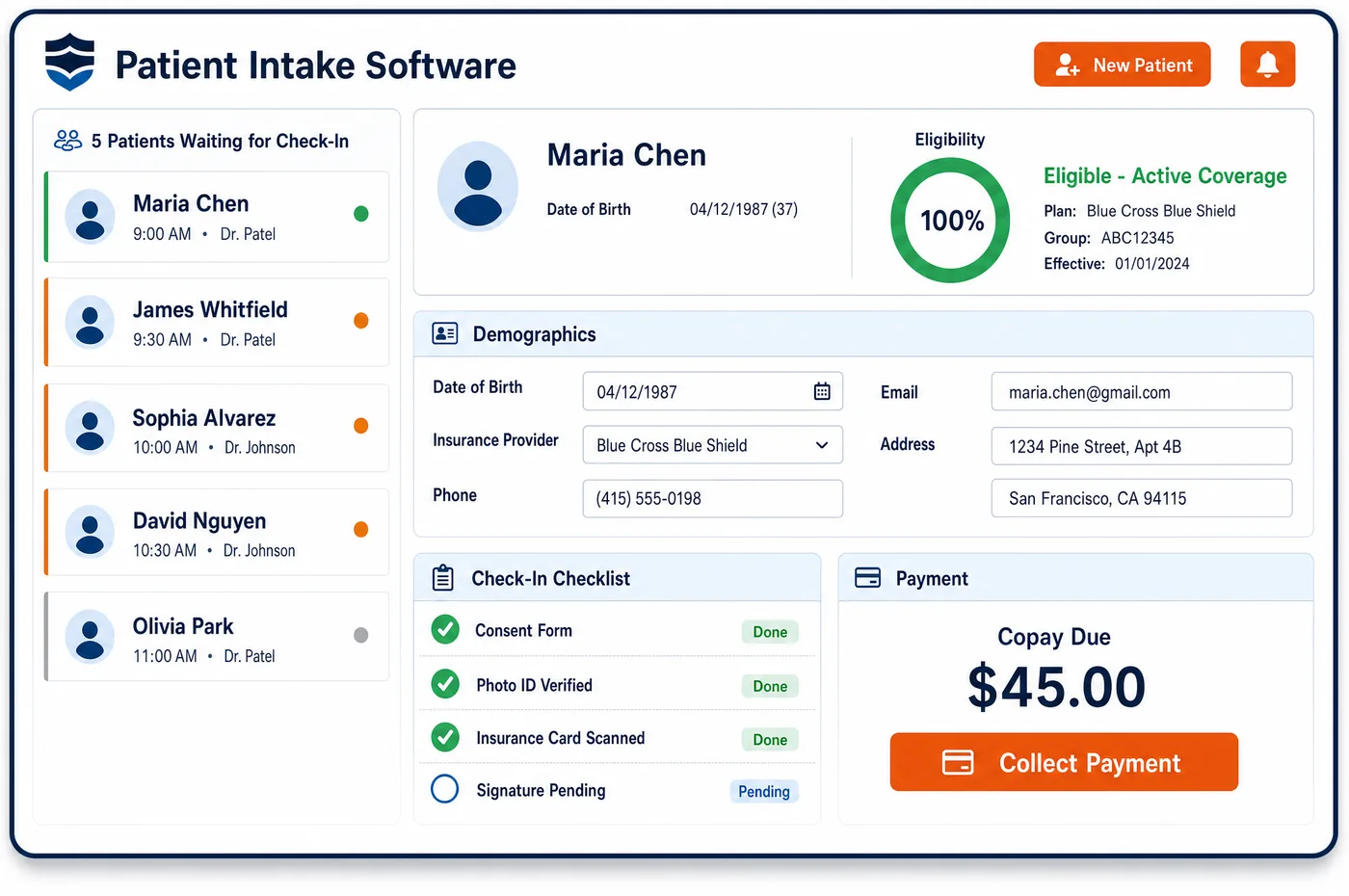
Intake in psychiatry begins when the visit is booked. The patient gets a secure link by text or email, and the forms match the visit type. A new evaluation asks for psychiatric and medical history, past diagnoses, hospital stays, substance use and every medication tried, with the dose and why it stopped. A follow-up asks for fresh rating scales and any changes since the last visit. Scored screens such as the PHQ-9 are calculated when the patient submits them and stored with the visit. Consents are signed in the same flow: a release to the primary care doctor, telehealth consent, the financial policy, and Part 2 consent where it applies. On the day of the visit, psychiatry patient intake software checks the patient in at a tablet or online. For video visits, it also confirms where the patient is joining from.
Why Is Patient Intake Different in Psychiatry?
A psychiatric evaluation is built on history. The clinician needs past diagnoses, every medication tried and why it stopped, hospital stays, substance use and family history. Collected on paper in the waiting room, that history is rushed and often incomplete. Collected at home before the visit, it is fuller and ready to review.
Rating scales carry more weight here than in most specialties. Scores such as the PHQ-9 and GAD-7 guide treatment, show response over time and feed quality reporting. They need to be scored the same way every time and stored as numbers, not as scanned images. Patient intake is the one moment when every patient completes them.
Consent is also heavier. Psychiatric practices collect releases to talk with primary care, telehealth consent, late cancellation policies, and sometimes 42 CFR Part 2 consent for substance use records. Each one has to be signed, dated and easy to find. Intake sits between psychiatry patient registration, which captures who pays, and the shared patient record, which keeps it all over time.
What Psychiatry Patient Intake Software Handles
- Validated rating scales (such as PHQ-9 and GAD-7)
- Patients complete rating scales on their own device before the visit. Each scale is scored on submission and stored on the visit, ready for the clinician and for measurement-based care. (CMS MLN Booklet: Behavioral Health Integration Services (MLN909432))
- Psychiatric diagnostic evaluation history (90791, 90792)
- The evaluation needs psychiatric, medical, family and social history. Intake gathers past diagnoses, medication trials, hospital stays and prior treatment before the 90791 or 90792 visit. (CMS MLN Booklet: Medicare & Mental Health Coverage (MLN1986542))
- AUDIT and DAST substance use screens
- Structured screens such as AUDIT and DAST can be built into intake forms. The answers and score land on the record for the clinician to review before the visit. (CMS MLN Booklet: Medicare & Mental Health Coverage (MLN1986542))
- Consent for behavioral health integration services
- Before BHI services start, the patient must agree to consults with specialists and be told that cost sharing applies. Intake records that consent, verbal or written, with its date. (CMS MLN Booklet: Behavioral Health Integration Services (MLN909432))
- 42 CFR Part 2 written consent
- Patients in a Part 2 program sign a written consent that meets Part 2 content rules. Intake collects it digitally and notes whether it is a single consent for treatment, payment and health care operations. (eCFR: 42 CFR Part 2, Confidentiality of Substance Use Disorder Patient Records)
- Audio-only telehealth choice
- Medicare allows audio-only mental health care at home when the patient can't use video or doesn't consent to it. Online check-in records that choice along with the patient's location. (CMS MLN Booklet: Telehealth & Remote Patient Monitoring (MLN901705))
How Does Psychiatry Patient Intake Software Work?
1. Send forms when the visit is booked
Booking triggers a secure link by text or email. The packet matches the visit type, so a new evaluation gets the full history and a follow-up gets a short update.
2. Collect history and medication trials
Patients list past diagnoses, hospital stays, substance use and each medication tried, with dose and reason stopped. The answers are saved as structured fields, not free text.
3. Score the screens
Rating scales are scored on submission and saved with the visit. Clinicians see today's score next to past scores before the visit begins.
4. Sign consents and policies
Releases of information, telehealth consent, the notice of privacy practices and the financial policy are signed in the same flow. Part 2 consent is added for patients in a substance use program.
5. Check the patient in
Patients check in at a tablet or online. For video visits they confirm where they are, which supports the right telehealth place of service on the claim.
Psychiatry Patient Intake Software vs. Generic Software
| Area | Generic approach | Unlimited Systems |
|---|---|---|
| History forms | Paper packets filled out in the waiting room. | Forms completed at home and stored as structured data. |
| Rating scales | Scored by hand and scanned into the chart. | Scored on submission and saved as numbers on the visit. |
| Consents | Signed copies filed in a binder or scanned. | Signed digitally, dated and stored on the record. |
| Telehealth check-in | Staff phone the patient to confirm they are ready. | The patient checks in online and confirms location. |
| Forms by visit type | One long packet for every patient. | Questions set by visit type, from new evaluation to follow-up. |
Who Uses It in a Psychiatry Practice
- Front desk: Fewer clipboards, shorter check-in, and a dashboard showing who has finished forms before they arrive.
- Psychiatrist: History, medication trials and today's scores ready to read before the patient sits down or logs on.
- Compliance lead: Every consent signed, dated and stored, with Part 2 consents kept distinct and access logged.
Psychiatry Patient Intake Software FAQs
Psychiatry patient intake software collects psychiatric and medical history, past diagnoses, medication trials, hospital stays and substance use before the visit. Patients also complete rating scales such as the PHQ-9 and GAD-7 and sign consents. Everything lands on the record as data, so the clinician can review it before the evaluation starts.
Rating scales built into intake forms are scored when the patient submits them. The score is stored as a number on that visit, which lets clinicians see change over time and lets the practice report on measurement-based care. Administrators choose which scales appear for each visit type, such as a new evaluation or a medication follow-up.
Psychiatric intake usually collects a release of information to the primary care doctor, telehealth consent, and the practice's financial policy, including any late cancellation fee. Patients treated in a substance use disorder program also sign a 42 CFR Part 2 consent. Each consent is signed digitally, dated and stored on the patient record.
For a video visit, the patient checks in online, finishes any open forms and confirms where they are. Location matters because Medicare uses POS 10 for telehealth in the patient's home and POS 02 for other places. For Medicare patients who cannot or will not use video, intake also notes that choice for audio-only care.
Intake forms can be set by visit type. A TMS session or a Spravato treatment can use a short form with only the questions that course needs, such as a current rating scale and recent changes. The full history packet is kept for a new psychiatric evaluation, so returning patients are not asked the same questions every time.
Completed intake forms, signed consents and scores post to the EHR as structured fields rather than static files. Clinicians read the history and scores in their own chart, and front desk staff see the same data in the practice management record, so nobody has to type it in twice.
Related Psychiatry Software
Front office
In the revenue cycle
Patient Intake for related specialties
Sources
GET STARTED
See Unlimited Systems in Action
Whether you're actively evaluating new technology or simply preparing for your next vendor renewal, Unlimited Systems can help you understand where your current workflows may be creating avoidable revenue risk.