

Analytics & value-based care
Psychiatry Analytics Software
See why psychiatric revenue, access and outcomes move: by payer, modality, code mix and clinician.
Psychiatry Analytics Software tracks the measures that run a psychiatric practice and explains why they change. It follows wait time to first evaluation, no-shows by visit type and modality, psychotherapy code mix, add-on use with E/M, denials by carve-out payer, and PHQ-9 and GAD-7 trends, across clinicians, sites and payers.



 6,500+ specialty providers

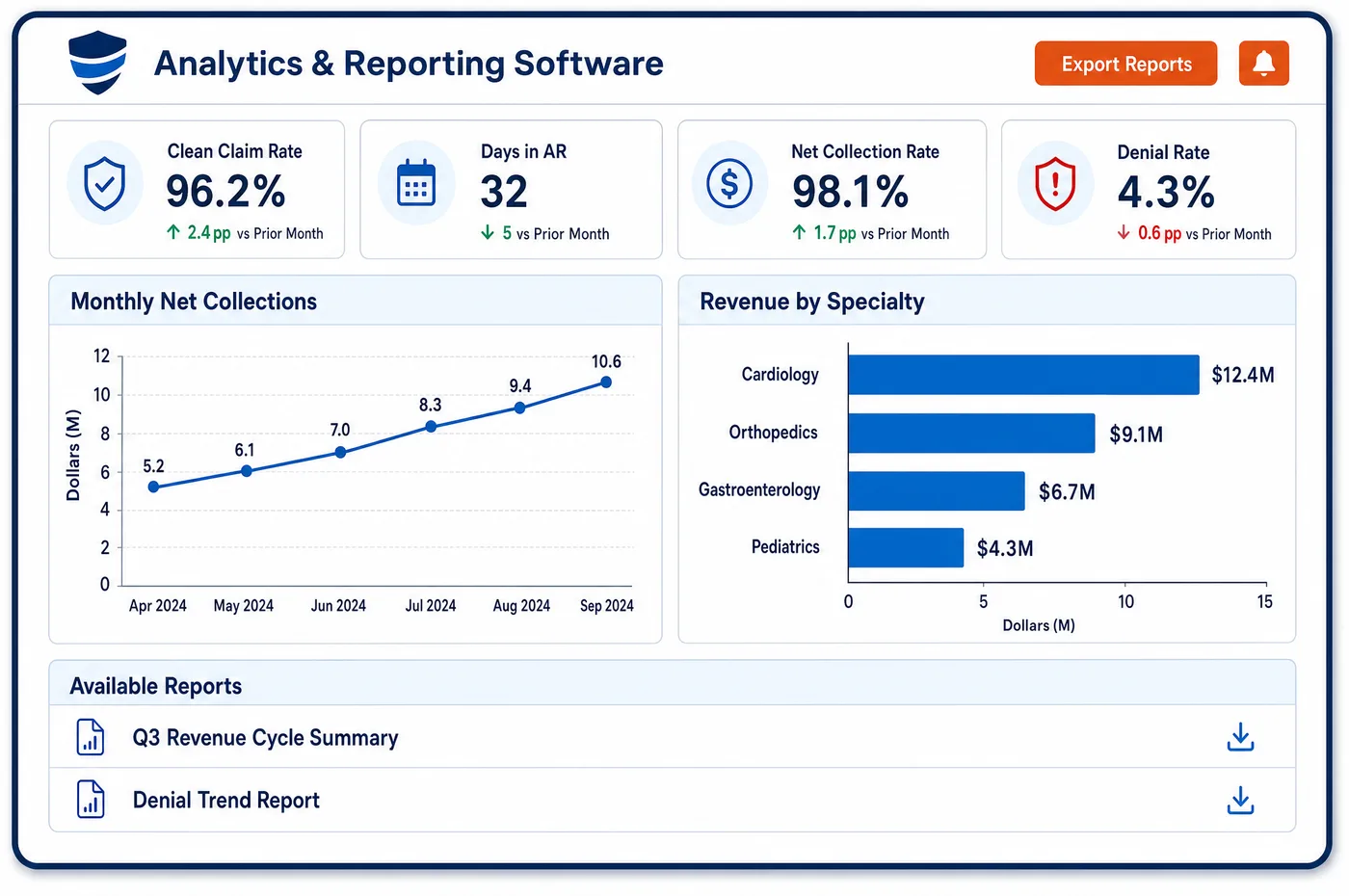
Analytics in a Psychiatry Practice
Psychiatry numbers move for reasons a simple total cannot show. A drop in collections may come from a carve-out that changed its fee schedule, a shift from 90837 to 90834, or a rise in audio-only visits that one payer pays at a lower rate. Unlimited Systems pulls scheduling, billing and clinical data into one model, so each change can be traced to its cause. Leaders can slice no-show rates by provider, visit type and POS 02 or 10. They can see how often E/M visits carry a psychotherapy add-on, and whether denials cluster on one payer. Outcome measures such as PHQ-9 scores sit beside the financial ones. Results can be compared with regional and national specialty averages to find real gaps. Scheduled delivery of these figures is handled by psychiatry reporting, and dashboard design by data visualization.
Why Is Analytics Different in Psychiatry?
Psychiatric revenue is built from many small, timed services. A practice that bills 90834 where it once billed 90837 can lose income with no change in volume. A practice that adds collaborative care gains revenue with no visits behind it. Generic analytics count visits and dollars. Psychiatry analytics has to count minutes, codes and modalities, because those are what the payer pays for.
Access is a financial measure here too. Long waits for a first evaluation push patients to other practices or to the emergency room. High no-show rates leave clinician time empty, and they often differ between in-person, video and audio-only visits. Seeing wait time and no-shows by provider and modality shows where the schedule leaks. That points to fixes in scheduling and reminders.
Payers add another layer. Behavioral health carve-outs and medical plans may pay the same code at different rates, and they apply prior authorization in different ways. Federal parity law says those limits must be no stricter than the plan's medical ones. Analytics that compare authorization and denial patterns by payer give a practice evidence when it questions a plan's rules.
What Psychiatry Analytics Software Handles
- Timed code mix: 90832, 90834 and 90837
- Code 90832 covers 16 to 37 minutes, 90834 covers 38 to 52, and 90837 covers 53 or more. Analytics track the mix by clinician, so a shift reads as a coding or scheduling change, not a mystery. (CMS Billing and Coding Article A57520: Psychiatric Diagnostic Evaluation and Psychotherapy Services)
- Add-on use with E/M
- How often E/M visits carry 90833, 90836 or 90838 is tracked by clinician. A sudden change can point to a template problem or a gap in time documentation. (CMS Billing and Coding Article A57520: Psychiatric Diagnostic Evaluation and Psychotherapy Services)
- Telehealth by POS 02 and POS 10
- Visits, payments and no-shows are split by place of service and by modifier 95 or 93. That shows how video and audio-only care perform with each payer. (CMS Medicare Claims Processing Manual, Chapter 26)
- PHQ-9 and GAD-7 trends
- Total scores coded as LOINC 44261-6 and 70274-6 are trended by condition and clinician. Change in symptoms sits beside revenue and access. (LOINC 44261-6: PHQ-9 total score)
- Parity in authorization rules
- Prior authorization on mental health benefits must be no stricter than on medical benefits. Authorization and denial rates are compared by payer to show where a plan's limits differ. (CMS: The Mental Health Parity and Addiction Equity Act)
- TMS authorization use
- Approved TMS sessions are compared with sessions given and billed under 90868. Unused or overrun authorizations show up before the course ends. (CMS Billing and Coding Article A57647: Transcranial Magnetic Stimulation)
How Does Psychiatry Analytics Software Work?
1. Unify the data
Scheduling, billing, remittance and screening scores feed one data model. The same patient and visit tie every source together.
2. Set the measures
Practices choose the KPIs that matter: wait time, no-shows, code mix, denials and collections per visit. Each measure has one definition across sites.
3. Slice by what drives psychiatry
Every measure can be split by clinician, visit type, modality, payer and carve-out. That is where most psychiatric variation hides.
4. Find the cause
When a measure moves, users drill into the visits and claims behind it. A collections drop can be traced to a payer, a code shift or a modality change.
5. Compare with peers
Results are compared with regional and national specialty averages. Real gaps stand out from normal swings in payer mix.
6. Feed fixes back
Denial causes found in analytics map back into claim rules. Access gaps go back to schedule templates and reminders.
Psychiatry Analytics Software vs. Generic Software
| Area | Generic approach | Unlimited Systems |
|---|---|---|
| Code mix | Visit counts only. | Mix of 90832, 90834 and 90837 by clinician. |
| Access | Wait times unknown until patients complain. | Wait to first evaluation by provider and site. |
| No-shows | One practice-wide rate. | Rates by visit type, modality and provider. |
| Payer performance | Carve-outs lumped in with medical plans. | Each carve-out measured on its own. |
| Outcomes | Symptom scores left in the chart. | PHQ-9 and GAD-7 trends beside financial measures. |
Who Uses It in a Psychiatry Practice
- Medical director: Outcome trends by clinician and condition, next to access and visit mix, for staffing and quality decisions.
- Practice administrator: Why collections, no-shows or wait times moved, with the visits and claims behind each change.
- Billing manager: Denial and payment patterns by carve-out and plan, so contract talks and denial prevention start from evidence.
Psychiatry Analytics Software FAQs
Psychiatry analytics should measure what drives a psychiatric practice: wait time to first evaluation, no-shows by modality, psychotherapy code mix, add-on use with E/M, denials by payer and carve-out, collections per visit and outcome scores. Each measure should split by clinician, site and payer, so a change can be traced to its cause.
A drop in therapy revenue can be traced through analytics to its source. The usual causes are a shift from 90837 to shorter codes, a carve-out fee change, more audio-only visits paid at a lower rate, or more no-shows. Drilling into the visits and claims behind the drop shows which one applies.
No-shows are measured by visit type and by modality, so video, audio-only and in-person visits each have their own rate. Splitting further by provider and day of week shows where the schedule leaks. Those findings feed reminder timing and booking rules, which is where no-show fixes are made.
PHQ-9 and GAD-7 total scores captured at visits are trended by condition and clinician. Because they sit in the same data model as visits and claims, leaders can view outcomes beside access and revenue. That helps when a payer asks for proof of results, or when a practice weighs a new program.
Analytics compare authorization and denial rates across behavioral health and medical payers. Federal parity rules require that limits on mental health benefits be no stricter than those on medical benefits. A clear pattern of tighter rules for therapy or TMS gives the practice evidence to raise with the plan or a regulator.
Benchmarking compares a practice's results with regional and national specialty averages. A psychiatric group can see whether its denial rate, collection rate or days in AR differ from peers. Real gaps then stand out from normal variation, and leaders can focus on the few measures that are truly off.
Related Psychiatry Software
Analytics & value-based care
In the revenue cycle
Analytics for related specialties
Sources
- CMS Billing and Coding Article A57520: Psychiatric Diagnostic Evaluation and Psychotherapy Services
- CMS Medicare Claims Processing Manual, Chapter 26
- LOINC 44261-6: PHQ-9 total score
- LOINC 70274-6: GAD-7 total score
- CMS: The Mental Health Parity and Addiction Equity Act
- CMS Billing and Coding Article A57647: Transcranial Magnetic Stimulation
GET STARTED
See Unlimited Systems in Action
Whether you're actively evaluating new technology or simply preparing for your next vendor renewal, Unlimited Systems can help you understand where your current workflows may be creating avoidable revenue risk.